| | | |
Dear Readers,
In Berlin, calls for additional landing rights for airlines from the United Arab Emirates have once again made their way onto the political and media agenda – even though two German airlines already fly from BER to Dubai. The armed conflicts in the Middle East once again painfully remind us that the political handling of (domestic) airlines extends far beyond the concerns of a single federal state. Emirates flies to Germany more than to any other country in the EU. This raises the long-standing question of how dependent we want to make ourselves in aviation. A strong aviation industry is an essential component of a sovereign Germany and Europe. Competitive conditions between the Gulf airlines and the German airlines are already severely distorted: The current weekly seat offering of the state-owned airlines from the UAE and Qatar to Germany is six times as large as that of German airlines (60,000 seats per week compared with 10,000). In terms of population, however, the situation is exactly the opposite. While Germany has 84 million inhabitants, the two Gulf states have a combined population of 13 million. It is not only in aviation that regulation and bureaucracy in Europe have reached excessive levels. The Commission must change course here, urges Meinrad Dreher, Emeritus Professor of Business Law at Johannes Gutenberg University Mainz and former judge at the Constitutional Court of Rhineland-Palatinate. In his guest contribution, he outlines ways to reduce complexity in European legislation and thereby stimulate economic dynamism. Bureaucracy reduction, as well as other key policy initiatives of the German federal government and the EU, is also the subject of an interview with Dr. Karl-Ludwig Kley. He will conclude his tenure on the Supervisory Board of Deutsche Lufthansa AG in May after 13 years, including eight years as Chairman. We warmly encourage you to read this interview – as well as the retrospective on our New Year’s Concert in Berlin, with which we marked the opening of the 100th anniversary celebrations. Andreas Bartels
Head of Corporate Communications
Lufthansa Group | Dr. Kay Lindemann
Head of Corporate International Relations
and Government Affairs
Lufthansa Group
|
| |
| | | | Competition with the Gulf regionEU and Germany need sovereignty in aviationThe United Arab Emirates (UAE) is seeking to expand landing rights for its airlines in Germany. It is receiving support from several German federal states that believe it would improve their connectivity. The opposite is the case. The ongoing military conflicts highlight this painfully. | |
| | | | Imbalance between aviation markets is growing
Airlines from the UAE are picking up passengers across Europe to fill their home hubs in Dubai, Abu Dhabi, and Sharjah with transfer passengers. EU airlines, European value creation, and jobs are losing out. 
Air traffic between the UAE and Germany
Winter flight schedule 2025/26 (weekly figures) | |
| | | | Safeguarding connectivity is the declared goal of German aviation policy. In a federal country like Germany, reliable global long-haul traffic particularly depends on the various regions being connected as closely as possible to German and European hubs. The armed conflicts in Iran and across the region underscore how vital European airlines are as a part of European sovereignty. Europe must be able to connect itself rather than depend on hubs in the Gulf region. Frankfurt and Munich alone currently serve around 200 destinations. Policy should aim to secure and expand this number. However, German hub connections have been suffering from excessive location costs for years. In November 2025, the German government therefore decided to reduce the aviation tax and other fees. The goal of this relief package would be completely undermined if airlines from the UAE were to receive additional landing rights. Contrary to common claims, Germany would not gain any direct intercontinental flights through additional frequencies for Emirates. Rather, the airline mainly transports transfer traffic (up to 80%) via its Dubai hub and thus benefits disproportionately from the German and European source market. But it is not only the unequal market volume between Germany/Europe and the UAE that raises concern. There are also immense competitive distortions with regard to climate, consumer, and social standards. This imbalance is shifting passenger flows away from Europe toward hubs in the Near and Middle East. The consequences are painful: in traffic between Germany and Asia, the share of nonstop flights and connecting flights via European hubs has fallen from over 60% in 2010 to 42% today. Such a continued skimming of passengers from Germany also has a dangerous side effect: many of the already weak feeder flights connecting important regions with domestic hubs would be weakened further. The Dresden–Munich route is a prime example. Iberia, Air France, and British Airways have already withdrawn from Stuttgart. Additional connections are at risk. If these disappear, it will inevitably come at the expense of domestic value creation – without providing any added benefit for connectivity. No other EU country is served as frequently by UAE airlines as Germany is today. Instead of correcting this imbalance, calls for even more landing rights for UAE airlines continue to surface. In Berlin in particular, the public debate does not seriously engage with the challenges of the location, but is quick to cast Lufthansa and its hub strategy as the root of all problems. Recently, a tourism representative from the city accused Lufthansa of “sidelining Berlin and the new federal states and shoveling tourists to Munich.” Apart from the fact that the airlines of the Lufthansa Group, as market leaders at BER, offer daily flights for more than 20,000 people to and from Berlin, this claim also fails to explain why long-haul flights to the German capital have been launched in recent years, only to be discontinued shortly thereafter: Los Angeles, New York, Washington, and Tokyo are just a few examples. It is a weak argument to accuse Lufthansa of drawing passengers to its hubs while trying to enable the UAE airlines to do the same for their hubs in Dubai and Abu Dhabi. Not to mention that UAE airlines could fly to Berlin tomorrow if they considered it more promising than, for example, Hamburg or Düsseldorf. Another point receives too little attention in Germany: Unlike European carriers, UAE airlines continue to use the Russian airspace, giving them significant cost advantages. Since the beginning of Russia’s invasion of Ukraine, they have even expanded their services to Russia considerably: In January 2026, Emirates and Etihad each operated three daily flights from Dubai/Abu Dhabi to Moscow (plus seven flights per week), while Flydubai increased its Moscow connections from one to more than eight daily flights. One thing is clear: Europe must safeguard its connectivity and strategic autonomy to avoid dependence on third countries. | |
| | | | Beneficiaries of the sanctions: UAE airlines massively expand flights to Russia
Since the start of the war of aggression against Ukraine, UAE airlines have greatly expanded their connections to Russia. German and European airlines fly around Russian territory (e.g., on Asia routes). For four years, this has led to significantly longer flight times and additional costs for airlines and passengers from Germany and the EU. 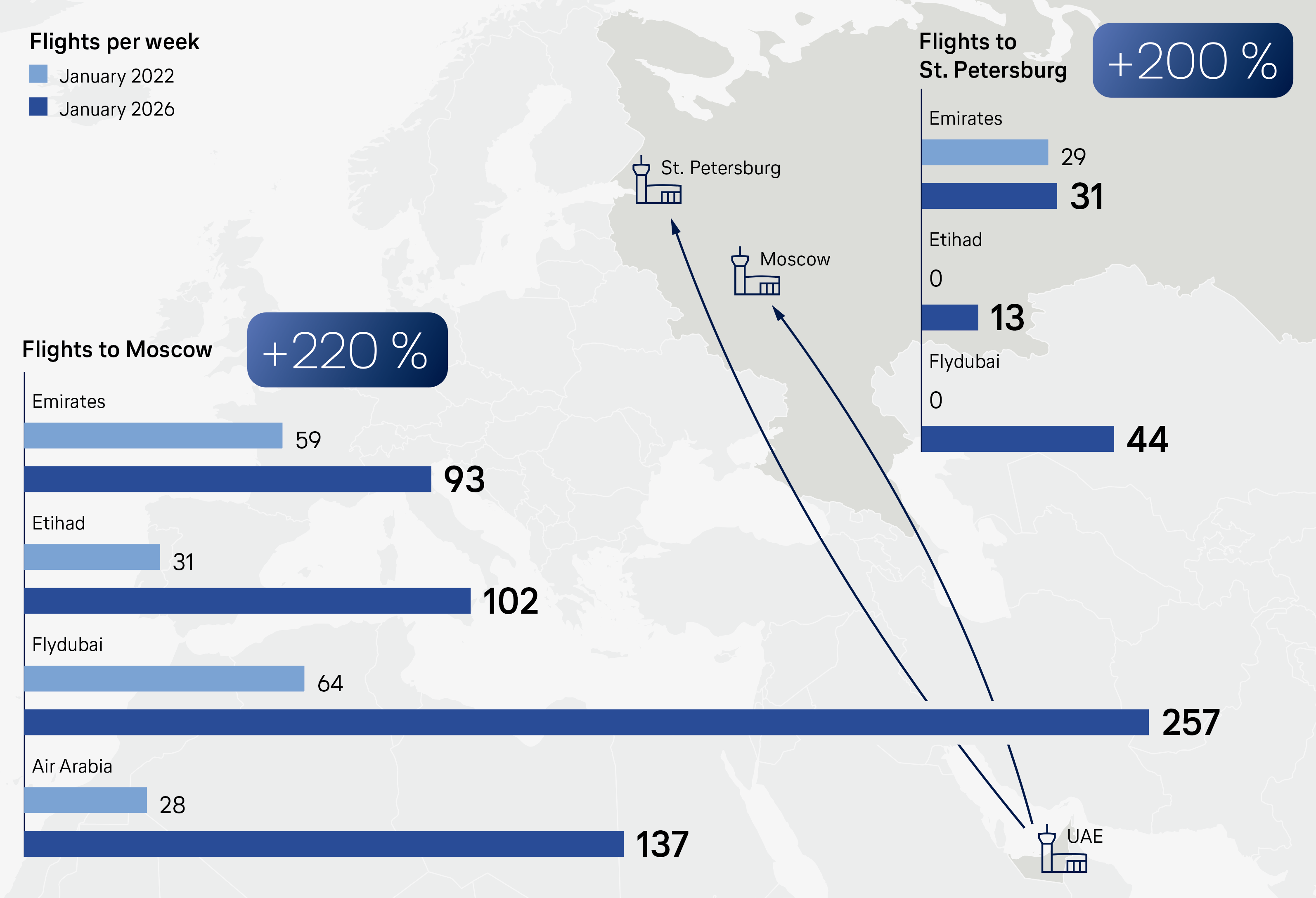
| |
| | | | After corruption allegations: suspend EU air transport agreement with Qatar
In addition to the radically unequal market conditions and socio-political disparities, the EU’s air transport agreement with Qatar (Comprehensive Air Transport Agreement, CATA) is further complicated by allegations of corruption. At the end of January, former senior EU official and chief negotiator of the agreement, Henrik Hololei, was dismissed by the European Commission following disciplinary proceedings. He is alleged to have benefited from free business class flights and hotel accommodation during the negotiations. Against this backdrop, it is long overdue for the EU Commission to suspend the air transport agreement with Qatar. Leading airline CEOs recently called for this in a letter to the EU Commission. Europeans for Fair Competition (E4FC) and numerous trade unions at German and European level support this position. | |
| | | | PtL ramp-upRecognizing realityPtL fuels can drive the decarbonization of aviation in the future. To achieve this, Europe’s climate policy must focus more on realism and the market economy rather than dirigisme and rigid quotas. | |
| | | | CO2 reduction through renewables by sector
Around 30 kWh of electricity are needed to produce 1 kg of PtL. This can avoid approximately 3 kg of CO2 in aviation – significantly less than when the same amount of energy is used in other sectors. 
Sources: GWPF, ePURE, BWP, Tesla, 3E Institute
| |
| | | | Since 2025, kerosene fueled in the EU for flights departing from the EU must contain a growing proportion of sustainable aviation fuels (SAF). From 2030, there will also be a sub-quota of 1.2 percent for power-to-liquid fuels (PtL), which is set to increase to 35 percent by 2050. However, the PtL quota in particular takes too little account of economic and technological realities. Contrary to political expectations, it has so far generated little supply. Investments in PtL plants remain risky. Electricity-based fuels are not yet produced in industrial quantities. As a result, their price is around ten times higher than that of fossil kerosene. In addition, PtL production is highly energy-intensive. To cover the Lufthansa Group’s annual fuel demand with electricity-based fuels alone, more renewable electricity would be needed than is currently consumed in Germany per year – over 250 billion kilowatt hours (kWh). Around 30 kWh of electricity is required to produce one kilogram of PtL. Although this saves around three kilograms of CO2 in aviation, the same amount of electricity avoids significantly more CO2 in other sectors. Without scaling, PtL is therefore likely to remain one of the most inefficient energy sources. Thinking across transport modes
The key to rapidly expanding supply is cross-modal demand. Opening the PtL quota in aviation to other transport modes could help significantly here. Several modes of transport could jointly meet the targets, competition distortions in aviation would be reduced, and other modes of transport – such as road transport – would gain access to eFuels. The CO2 reduction would be at least equally significant. Making EU climate protection competition-neutral
The current EU quotas for SAF and PtL have a structural flaw: they place a one-sided burden on EU airlines. European carriers bear the additional costs of SAF, while airlines with hubs outside the EU bear almost none. This distortion of competition is not only unfair, but also slows down the ramp-up of SAF. The EU must adjust its regulations to include non-European airlines in SAF financing and create a level playing field. Reducing regulatory costs
In 2025 alone, Lufthansa Group’s additional costs for biogenic SAF amounted to around 200 million euros – with a strong upward trend. Double auction mechanisms could bundle demand, close the price gap with fossil kerosene, and give producers investment certainty. Revenues from EU emissions trading (ETS) should be consistently used to ramp up sustainable fuels. In addition, the EU should provide airlines with further free SAF certificates under the EU ETS. Only economically strong companies can shoulder the necessary investments in climate protection. A realignment of EU climate policy is crucial to ensure that aviation can continue to connect cultures and economic areas sustainably in the future. | |
| | | | In conversation withDr. Karl-Ludwig KleyDr. Karl-Ludwig Kley is Chairman of the Supervisory Board of Deutsche Lufthansa AG. In May, he will conclude his tenure after 13 years, including eight years as Chairman. | |
| | | | 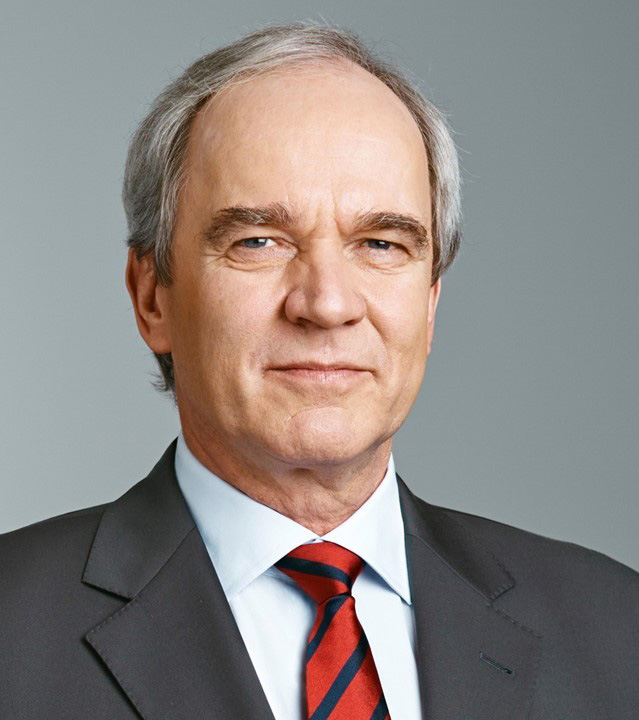 Dr. Karl-Ludwig Kley | |
| | | | Mr. Kley, what worries you more at the moment – the German government’s seemingly powerless reform policy or the EU institutions’ bureaucratic machinery, which continues to run at full speed?
I am indeed seriously concerned. But I don’t want to be the one who constantly criticizes everything and knows how things could supposedly be done better. I also see developments in politics that are moving in the right direction. Where and what are they?
For example, the modernization of the state, combined with a reduction in excessive bureaucracy. There is the dedicated Ministry for Digital Transformation and Government Modernization, headed by Karsten Wildberger, who is getting a lot of things off the ground. Namely?
Many concrete proposals were made at the federal and state conference in December. If these are implemented, citizens will feel the effects directly – for example regarding approval requirements or in commercial and general administrative law. EU decisions should also be adopted in Germany strictly on a one-to-one basis, without being complicated further by additional German requirements. Your confidence is commendable. But can you truly see the much-quoted ‘Deutschland-Tempo’ (Germany’s pace) at which the country is supposed to cut red tape and enable sustainable economic growth?
The term ‘cutting red tape’ is not entirely accurate. And it is not primarily about retention or reporting obligations. We naturally need bureaucracy to some extent. What we must do now is to comb through laws and administrative regulations to determine whether they make sense and – very importantly – whether they are feasible. In addition, policymakers and administrators must curb their persistent tendency toward a regulatory tsunami. How do you assess the federal government’s economic policy beyond the issue of reducing bureaucracy?
With Federal Minister for Economic Affairs and Energy Katherina Reiche, common sense is finally returning. In energy policy, for example, we are back on the right track. And the same applies to other measures as well. How can policymakers free themselves from outdated patterns of thinking and acting?
Basically, it’s about change management. In my own career, I have seen how difficult it is to implement change even in companies. However, companies usually have a meta-level you can rally everyone behind. In politics, it is much more difficult to find such a meta-level. A coalition agreement, for example, does not lead to common goals, but defines a work program and is full of compromises. Isn’t safeguarding our democracy the overarching goal that the established parties should pursue together?
Yes, that’s true. But even on this point, opinions differ in practice. Some want to safeguard democracy by giving a voice to every minority opinion, no matter how outlandish. Others say that it’s about representative democracy, in which not every individual sentiment can be taken into account. What do you suggest?
It would be wiser to start one level below and develop a concrete, shared understanding of how to safeguard democracy. Five pages outlining the basic direction should be enough. In foreign policy, I find the current government’s performance quite remarkable. In terms of domestic policy, I don’t yet see a shared understanding of the direction in which our country needs to move. In addition, policymakers far too often attempt to solve every problem by throwing money at it. The state would serve citizens better if it did not subsidize everything, but instead supported the initiatives of citizens and businesses – and if it stopped trying to shield consumers from every imaginable, even absurd, risk. What’s wrong with protecting consumers?
There is an imbalance in the EU between competition and consumer protection. Of course, Brussels is currently talking a lot about competitiveness. But none of the other goals on climate or consumer protection have been withdrawn or reduced. Competition Commissioner Teresa Ribera has publicly stated that she sees herself primarily as a consumer protection advocate. However, both competition and the issues of climate and consumer protection must be considered together, otherwise competitiveness will continue to decline. Have the EU institutions become too detached from reality?
We have a structural problem in the EU. The EU has evolved from a project of freedom and community to a regulatory project. Currently, the Commission is not accountable to anyone. That is a design flaw. In addition, while non-governmental organizations, or NGOs, have tremendous influence in Brussels, the voice of business is hardly heard, if at all. Wait a minute, the automotive industry is getting its desired end to the ban on combustion engines.
In general, companies hardly ever get their concerns heard in Brussels. A year ago, as Chairman of the Supervisory Board of Lufthansa, I wrote a letter to EU President Ursula von der Leyen and several other politicians, together with our employee representative on the Supervisory Board, Christine Behle. In the letter, we drew attention to the difficult competitive situation in the aviation sector and demanded concrete answers. To this day, we have not received a response from Ms. von der Leyen. At least the German government seems to have recognized the economic challenges facing the aviation sector. The aviation tax is being reduced.
The reduction in the aviation tax, which I acknowledge, is strictly speaking merely a reversal of last year’s increase. It can only be a first step toward addressing a structurally existing competitive distortion. Lufthansa has responded: no further routes are being cut. Eurowings is expanding its services in Berlin, for example. From a business perspective, these steps are not strictly necessary and are being supported by the supervisory board with considerable goodwill. Is aviation too heavily regulated?
Compared to other industries, aviation is not worse off in terms of regulatory dynamics. The big difference is: our margins are different – they are lower. A bundle of charges becomes a risk much more quickly in aviation than elsewhere. In addition, airlines that connect their home countries with the world cannot respond to this pressure by relocating abroad. Nevertheless, the current competitive situation has consequences in aviation as well. Through acquisitions, the Lufthansa Group has structured its European network in such a way that more aircraft are now based at its foreign hubs than at its hubs in Germany. Speaking of acquisitions: the integration of the Italian ITA is still ongoing, and Lufthansa is already interested in TAP in Portugal. Size does not automatically lead to economic success. Is further consolidation in Europe even necessary?
It depends on who you ask. From the Portuguese point of view, it is necessary because TAP cannot compete globally on its own. Another question is whether it is good for potential interested parties such as IAG, Air France-KLM, or the Lufthansa Group. IAG would have the entire Iberian Peninsula in its hands, which could be difficult in terms of competition law. Air France-KLM also has greater overlaps with TAP, whereas within the Lufthansa network there is still significant untapped potential on the South Atlantic routes. Then let me ask differently: why does Germany need Lufthansa? Competitors would quickly fill any gaps in the route network and secure the jobs as well.
A major industrial nation gains competitive advantages from having its own national airline. This is especially true for an export driven country like Germany. In both in services and industry, many business models depend on strong connectivity to global markets. That is why our economy would be worse off without Lufthansa. The interview was conducted by Peter Brors and Jens Koenen for Handelsblatt. It was published there on December 22, 2025 and is reproduced here in abridged form. | |
| | | | Regulation and bureaucracy in EuropeDisruption instead of dissimulationGuest contribution by Meinrad Dreher, Emeritus Professor of Business Law at Johannes Gutenberg University Mainz and former judge at the Constitutional Court of Rhineland-Palatinate. | |
| | | |  Prof. Dr. Meinrad Dreher, LL.M. | |
| | | | In 2015, a book by the well-known critic of capitalism David Graeber was published. Its title was: “The Utopia of Rules: On Technology, Stupidity, and the Secret Joys of Bureaucracy.” His thesis: “Any market reform, any government initiative intended to reduce red tape and promote market forces will have the ultimate effect of increasing the total number of regulations, the total amount of paperwork, and the total amount of bureaucrats the government employs.” Looking back, he seems to have been right. But are we doomed to remain stuck in this trap? The stocktaking is quite brief: regulation and bureaucracy in the EU have reached excessive levels. Everyone knows examples of this. And numerous studies show that more than half of the bureaucratic burdens originate in Europe. Equally concise is the diagnosis: for many years, the illness – namely the excess of European regulation and bureaucracy – was dissimulated. Such downplaying or concealment may work for a while. But at some point, the problem becomes apparent. Then – as is the case now – counter-reactions appear. Regulation and bureaucracy permeate society and the economy, paralyze individuals and companies, erode competitiveness, and lead to losses of prosperity. Modern societies are complex, and with that comes a loss of certainties. Bureaucracy and regulation do – whether actually or perceived – reduce uncertainties and risks. At the same time, they channel dynamics and transformations. Regulation and bureaucracy can therefore in principle be necessary, useful, and efficiency-enhancing. But like any steering instrument, they are ambivalent. The result is a paradox: on the one hand they provide certainty and coordination; on the other, once they exceed a reasonable limit, they undermine dynamics, innovation, and economic vitality. What is the response to this diagnosis of European regulation and bureaucracy having become oppressive? Disruption instead of dissimulation! This means stop treating individual symptoms within the existing system. A course correction is needed! The European Commission is still largely operating on the old track. It addresses matters downstream from the root causes of regulation and bureaucracy. Example: the planned amendments to the directives on supply chains and sustainability reporting. Measures include postponing entry into force, narrowing the scope of application, and reducing reporting obligations. But in the end, many overly bureaucratic rules and the ability of Member States to create other or additional regulations remain in place. So, what are the key questions – and thus the starting points – for real disruption in Europe? First and foremost: reducing complexity and cutting back on regulation and bureaucracy by reforming delegated acts
Unlimited delegated acts are the main cause of excessive regulation and bureaucracy. The Council and the European Parliament have given away control over delegated regulations. This has resulted in significant de-parliamentarization. In 2023/2024, the Commission issued 552 delegated acts, often with highly detailed provisions; nevertheless, the Parliament raised only five objections and the Council none. Each withheld authorization for delegated acts has a significantly larger effect than many other measures at European or at national implementation level – and that without any cost. Second point: Reducing complexity and cutting regulation and bureaucracy through principle-oriented regulation at all levels
What does this mean? For many areas of economic legislation, there are two abstract regulatory models: principle-oriented and rule-based. Rule-based regulation is the traditional model: pursuing objectives through detailed, subsumable facts. Example: requiring a legally detailed compliance management system for all companies. Principle-oriented lawmaking takes a different approach: it largely limits itself to specifying an objective, i.e., rather short, qualitative legal criteria. Example: requiring companies to have an appropriate, adequate and effective compliance management system. In practice, principle-oriented legal acts are undermined by detailed, granular and rule-based subregulations – e.g., guidelines and FAQs. The reasons for this include not only the regulatory enthusiasm of European institutions, but also, unfortunately, the constant calls from companies and their associations for detailed “guidance,” despite simultaneously calling for deregulation and de-bureaucratization. The result is usually that despite initial principle-orientation, over-regulation and over-bureaucratization arise. Third point: Reducing complexity and cutting back on regulation and bureaucracy by limiting European agencies
What is the problem? 42 European agencies with approximately 13,000 employees are scattered across the Member States to contribute to the implementation of the Union’s measures. The topics range from pharmaceuticals and workplace safety to financial services supervision. They all contribute significantly to regulation and bureaucracy. Their pronouncements create a flood of rules that even experts in the respective fields can barely oversee. In the end, the number and activities of European agencies urgently require limitation. Fourth point: Reducing complexity and cutting back on regulation and bureaucracy by reducing the number of mandated corporate officers
Anyone who wants to reduce regulation and bureaucracy in the economy inevitably encounters the system of mandated corporate officers. Today, European and German legislators pursue around 50 supposedly important concerns by obliging companies to appoint individuals as representatives, specialists, or responsible persons. Each such obligation interferes with the freedom of entrepreneurial organization. However, the company managers are in any event obliged to comply with legal requirements, including those relating to hazard prevention. Fifth point: Reducing complexity and cutting back on regulation and bureaucracy by refraining from excessive consumer protection and socialization of ordinary life risks
Consumer protection is one of today’s “weasel words.” Hayek used this term to describe seemingly agreeable concepts with vague meanings. On the one hand, “consumer protection” means protecting consumers, tenants, or employees; on the other, restricting contractual freedom and less protection for those seeking housing and employment. The more protection there is for some, the more limited and expensive the options become for others. Therefore, despite widespread political enthusiasm for mandatory consumer protection, we must ask whether this path is the right one in a free society. The issue concerns the right to self-determination, private autonomy, legal paternalism, and ultimately excessive regulation and bureaucracy. In addition, consumer protection often serves to socialize ordinary life risks. Take the Package Travel Directive, for example, which exists because consumers had booked package tours with very price-aggressive tour operators. After the tour operators went bankrupt, consumers would have had to pay for their return flights themselves. Since then, package travelers have benefited from state protection rather than having to rely on their own insurance or avoid dubious low-cost offers. Sixth and final point: reducing complexity and cutting back on regulation and bureaucracy by abandoning the “German vote” in the Council of the EU
What is the German vote? For a long time, and not just in the last three years of the coalition, Germany has abstained from voting in the Council on regulatory and bureaucratic monsters. The reason: disagreement within the government. Specifically, the voting figures for 2010 to 2023 show the following: Germany abstained 35 times and voted no 28 times. This means that 63 legal acts apply in Germany even though Germany did not approve them. That ranks Germany in 21st place out of 27 in the Union. Criticism of excessive regulation and bureaucracy is often misunderstood as criticism of the European project. However, it will only succeed in the long term if we curb such excesses. Given the situation today, dissimulation is no longer helpful – disruption is necessary. For now, we are still talking about curative rather than palliative measures. The text is a shortened version of the article published in the FAZ newspaper on August 12, 2025. | |
| | | | 100th anniversary of Lufthansa’s foundingNew Year’s Concert 2026 in BerlinFrom the swing of the “Golden Twenties” to today’s hits and a specially commissioned anniversary symphony: the Lufthansa Group’s New Year’s Concert took its guests on a musical journey through a century of aviation – and thus through the history of Lufthansa. | |
| | | | 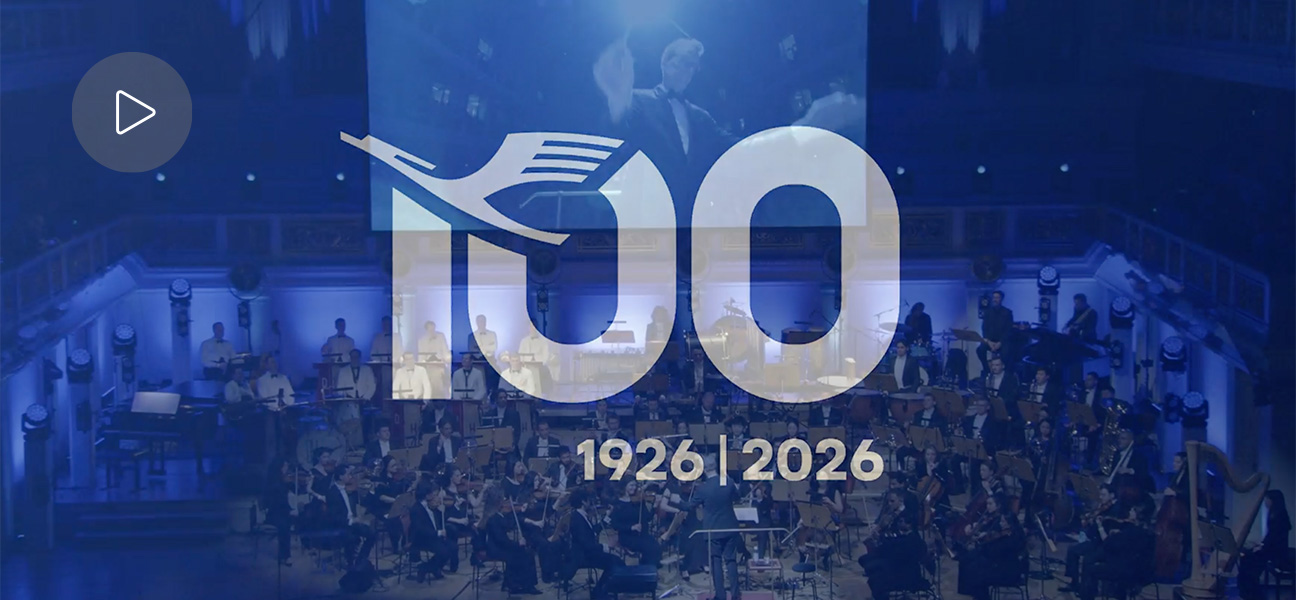 Highlights of the New Year’s Concert in video | |
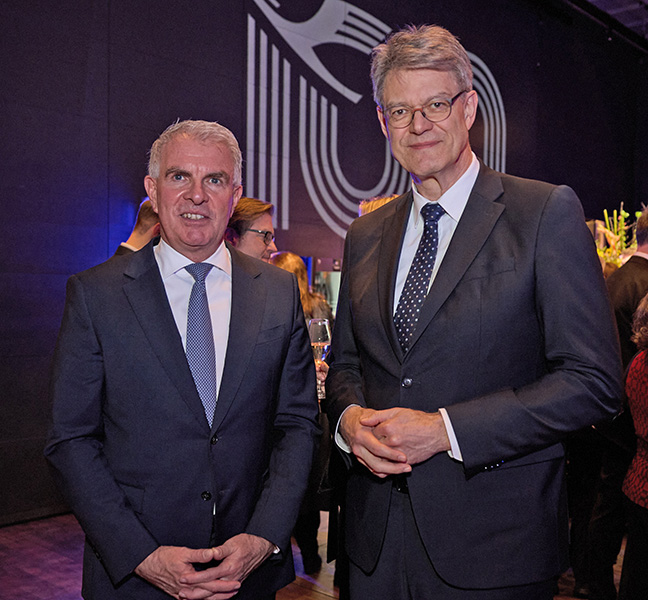
| | | | More than 1,000 guests from politics, diplomacy, business, and culture followed the invitation to the Konzerthaus on Berlin’s Gendarmenmarkt, including Federal Minister of Transport Patrick Schnieder, numerous ambassadors, and representatives from the federal government, the states, and the German Armed Forces. | |
| | | | | Carsten Spohr, CEO of the Lufthansa Group, and Patrick Schnieder, Federal Minister of Transport, at this year’s New Year’s Concert. |
| |
| | | | “We made a conscious decision to begin our year of celebrations where it all began 100 years ago: in Berlin,” said Carsten Spohr, CEO of the Lufthansa Group, in his opening speech. On January 6, 1926, Deutsche Aero Lloyd and Junkers Luftverkehr AG founded the first “Luft Hansa”. Just three months later, on April 6, the first scheduled flights to Cologne and Zurich took off from Tempelhof Airport. Today, the Lufthansa Group is by far the market leader at the German capital’s airport. The Group’s subsidiary Eurowings is making a particularly significant contribution to this, having stationed nine aircraft at BER and growing steadily – for example, with new routes to London and Rome. | |
| | | | 
The pioneering years of the first Luft Hansa were opened musically by David Hermlin and His Swing Dance Orchestra. | |
| | | | Lufthansa during National Socialism
A reading shed light on the darkest chapter in the company’s history. Actor Lars Eidinger presented the personal account of Lufthansa forced laborer Jan M. From 1933 onwards, Lufthansa was part of the Nazi regime and its war crimes and criminal acts. The airline supported military rearmament and trained pilots for the Luftwaffe. It employed thousands of forced laborers in its frontline repair operations. | |
| | | | Lars Eidinger during the reading. | |
| |
| | | | Appeal to policymakers
CEO Carsten Spohr also used the evening to once again call on politicians to ensure fair competition for European airlines. He said that the German government’s relief package was a good first step toward strengthening Germany as an aviation and business hub. However, to ensure connectivity in the long term, further cost reductions must follow quickly. Above all, EU climate policy is burdening its own aviation industry with unilateral requirements, such as the blending mandates for sustainable aviation fuels. Non-European airlines, on the other hand, benefit from low location costs, lower social and environmental standards, and billions in government investment for the aviation sector. “This fundamental imbalance distorts competition and threatens jobs in Europe with their high social standards,” said Spohr. | |
| | | | 
Yvonne Catterfeld and Max Mutzke performed the songs “Hit the Road, Jack” and “Me & Mrs. Jones” together. | |
| | | | Strengthening aviation together
In his speech, the Lufthansa Group CEO also called for strengthening Europe’s own sovereignty in aviation. “We need a clear commitment to the aviation sector in Germany and Europe. Not as an end in itself and not for Lufthansa, but because we are part of the infrastructure of an export nation,” said Spohr. Especially in times of geopolitical uncertainty, it is important to ensure our ability to act: “If we cannot supply ourselves with energy and cannot yet defend ourselves, then we must at least ensure that, as a major economy, we can connect ourselves with the world.” | |
| | | | 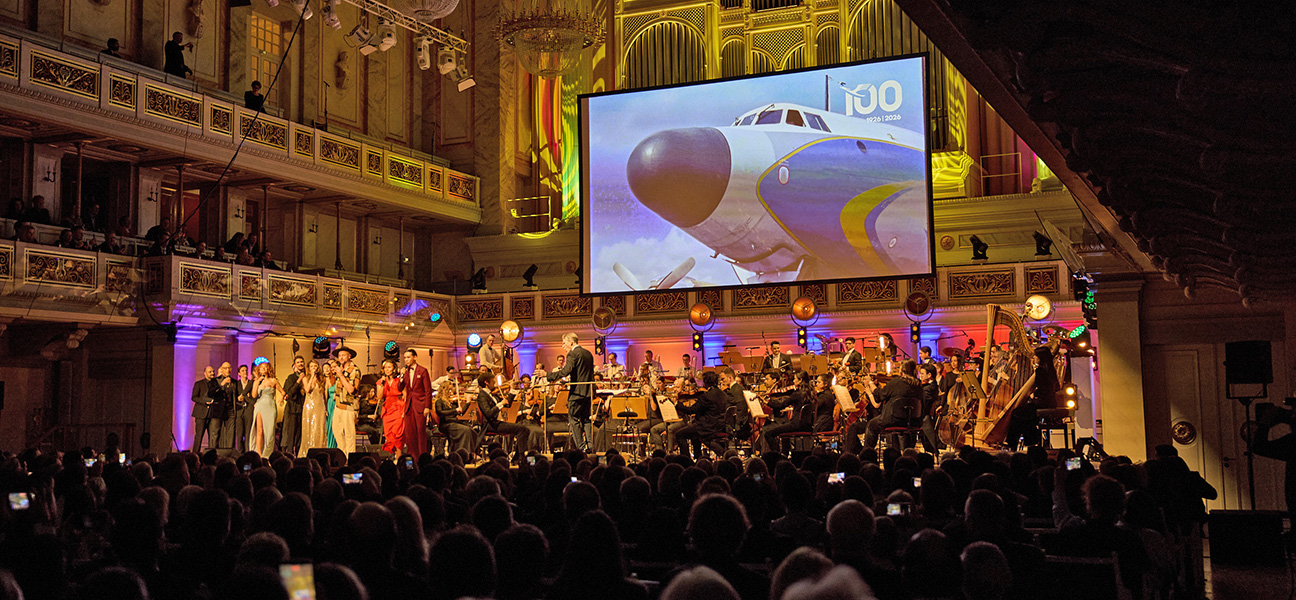
At the end of the evening, all the musicians played Stevie Wonder’s “Happy Birthday.” | |
| | | | London, Lisbon, Rome: Eurowings further expands its offering from Berlin
Germany’s largest leisure airline is expanding its route network and will connect BER with additional European capitals. Starting this summer, flights to London will operate up to twelve times a week, while Lisbon will be served up to three times per week. In November, a highlight for fans of Italy will follow: Eurowings will then offer four weekly non-stop flights from the German capital to Rome. | |
| | | | Lufthansa Group upgrades A320 fleetOptimized flight routesAutomated communication between the cockpit and air traffic control enables more efficient flight paths. This saves fuel, reduces emissions, and increases punctuality.To enable optimized flight routes, the Lufthansa Group is equipping its existing Airbus A320 fleet with modern technology. Starting in 2026, 134 aircraft will be fitted with the FANS-C (Future Air Navigation System – Controller) communication system. This software transmits 4D flight path data on position, altitude, direction, and time to air traffic control in real time. Based on this data, bottlenecks in airspace can be avoided. Takeoffs and landings become more efficient. The result is lower CO2 emissions and improved punctuality. The technology is already in use in Maastricht airspace. Together with other air traffic control authorities, the Lufthansa Group is working to extend its use to other EU airspaces. From 2028, the technology must be installed ex-factory in all newly delivered aircraft and air traffic control ground systems in the EU. The Lufthansa Group had already decided in 2024 to equip all new additions to its A320neo fleet with FANS-C technology. | |
| | | | According to current findings, it is not yet possible to deliberately fly around areas where climate-impacting contrails can form during regular operations. This is shown by the results of the 100-flights-program in which the Lufthansa Group participated as part of the “D-KULT” research project coordinated by the DLR. Routine use is currently hampered by a lack of automation, inaccurate weather forecasts, and unclarified effects on fuel consumption and climate balance. Further research therefore remains essential. In principle, flight routes can be adjusted and climate-impacting contrails can be partially avoided. However, the manual planning effort remains too high. In addition, there is a lack of comprehensive findings on the effects of re-routings on fuel consumption and climate balance. Together with TUIfly, DHL/EAT, Condor, German Air Traffic Control (DFS), and Eurocontrol, the Lufthansa Group participated in the 100-flights-program. Through targeted route optimization in flight planning, the airline group avoided areas with so-called ice-saturated air layers, in which particularly long-lasting contrails can form, on a total of 43 flights. | |
| | | | Lufthansa GroupYour contacts PDF PDF

Andreas Bartels
Head of Corporate
Communications
Lufthansa Group  +49 69 696-3659 +49 69 696-3659
 andreas.bartels@dlh.de andreas.bartels@dlh.de
| 
Dr. Kay Lindemann
Head of Corporate International
Relations and Government Affairs
Lufthansa Group +49 30 8875-3030
kay.lindemann@dlh.de
|

Martin Leutke
Lufthansa Group &
Lufthansa Airlines
Communications +49 69 696-36867
martin.leutke@dlh.de
| 
Jan Körner
Head of Government
Affairs Germany
Lufthansa Group
+49 30 8875-3212
jan.koerner@dlh.de
|

Sandra Courant
Head of Political Communication
and Media Relations Berlin
Lufthansa Group +49 30 8875-3300
sandra.courant@dlh.de
| 
Ruben Schuster
Head of EU Liaison Office
Lufthansa Group
+32 492 228141
ruben.schuster@dlh.de |
| |
| | | | Published by:
Andreas Bartels
Head of Corporate Communications
Lufthansa Group Dr. Kay Lindemann
Head of Corporate International
Relations and Government Affairs
Lufthansa Group Martin Leutke
Lufthansa Group &
Lufthansa Airlines
Communications
Deutsche Lufthansa AG
BER CP, Konzernrepräsentanz
Lennéstraße 3, D-10785 Berlin | Editor in Chief:
Sandra Courant Editorial Staff:
Marie-Charlotte Merscher, Dr. Christoph Muhle, Nikolas Pfaff, Philipp Struve, Nicolas Vad, Jim Würz Press Date:
4 March 2026 Agency Partners:
Köster Kommunikation |
| |
| | | | Received the policy letter via forwarding? Subscribe here for free. | |
|