| | | | Dear Readers, At first glance, the proposal appears to be a good idea for creating fairer market conditions in aviation: In future, the European Emissions Trading System would no longer apply only to intra-European flights, but also to intercontinental flights departing from Europe. Why this plan by the European Commission would not actually lead to fairer competition, but instead further weaken European airlines, is outlined in this Policy Brief. Also in this issue: What are Europe’s plans for aviation? This fall, the European Commission will present its first Aviation Strategy since 2015. It offers an opportunity for an urgently needed and long-overdue course correction in European aviation policy. Excessive regulation and one-sided burdens on European airlines must be addressed, and the course must be set to strengthen global competitiveness. The German Federal Government has also recently presented a National Aviation Strategy. It was unveiled by Federal Chancellor Friedrich Merz at the International Aerospace Exhibition (ILA). The strategy’s goal is clear: to make Germany a leading aviation nation. However, the measures to achieve this goal lack the same clarity. Concrete proposals to strengthen the international connectivity and industrial value creation of Germany’s economic regions are still missing. Speaking of regions: Did you know that the Lufthansa Group in Germany does much more than just fly? Whether in aircraft maintenance, IT, the defense sector or onboard products, the Group’s subsidiaries, with production sites in many German states, are an integral part of the country’s economy. Enjoy the read! Andreas Bartels
Head of Corporate Communications
Lufthansa Group | Dr. Kay Lindemann
Head of Corporate International Relations
and Government Affairs
Lufthansa Group
|
| |
| | | | EU Emissions Trading SystemETS revision must strengthen competitivenessThe European Emissions Trading System (EU ETS) increases the cost of flights via European hubs and weakens Europe as an aviation location. To safeguard Europe’s competitiveness and connectivity, the upcoming revision must result in lower costs. Expanding the scope of the ETS would be a further step towards weakening European airlines unilaterally and significantly. | |
| | | | Additional costs per ticket in 2035 from the SAF blending mandate and expanded EU ETS
An ETS scope expansion would further increase costs for EU airlines unilaterally. 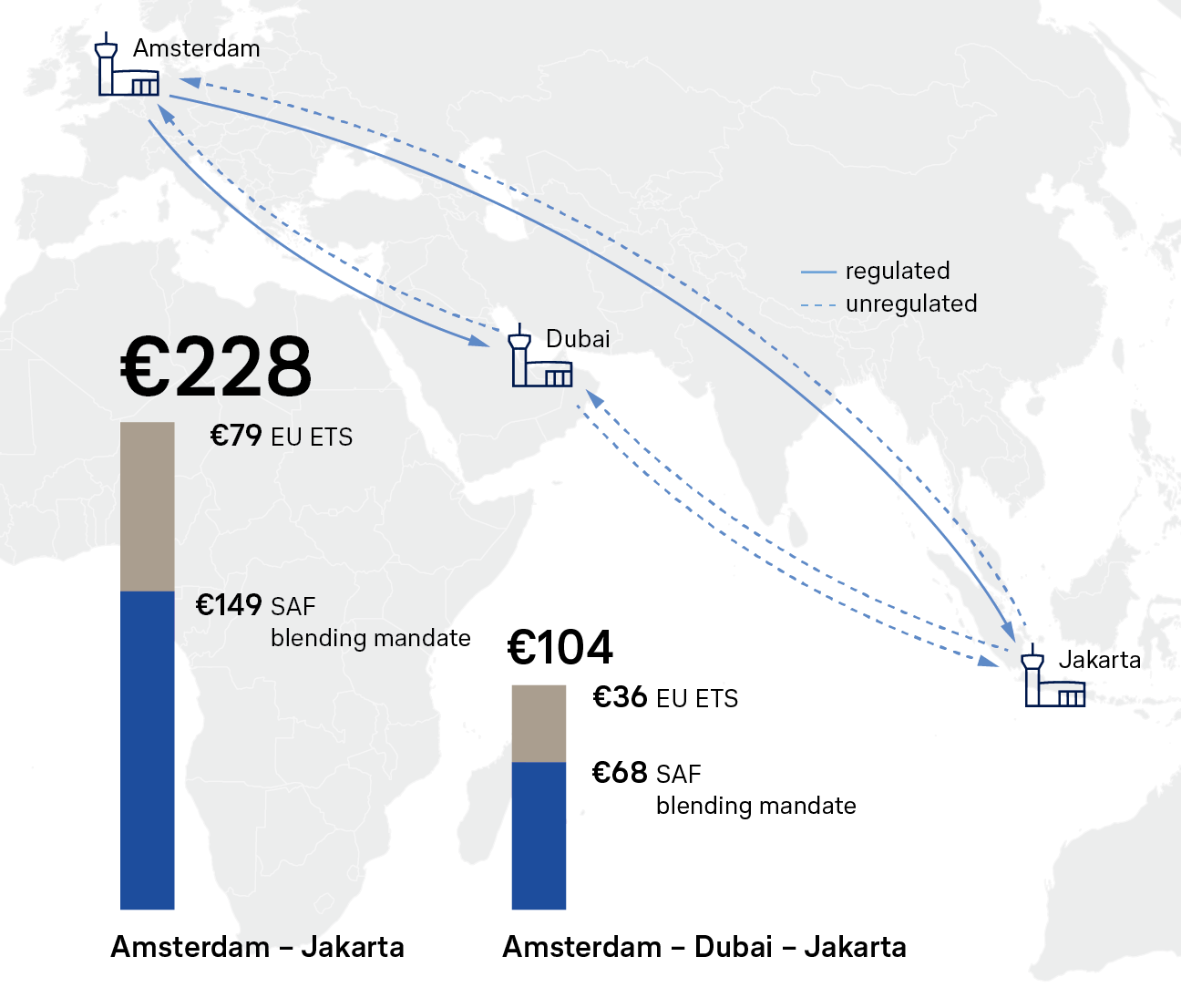
Source: own calculations | |
| | | | The ETS is a key EU climate protection instrument. In the aviation sector, it applies to flights within the European Economic Area. It places a price on CO2 emissions and requires companies to purchase allowances for their emissions. However, even the current structure of the EU ETS leads to structural distortions of competition in the aviation sector. This is because ETS creates a two-tier system between airlines that operate long-haul flights from European hubs and those that depart from hubs just outside the EU. As a result, connecting flights within the EU become more expensive. Passengers, cargo, and emissions are shifting to third countries – without any benefit to the climate, but to the detriment of Europe’s connectivity. No expansion of the ETS scope
If the European Commission has its way, this disadvantage for EU companies will only grow. Instead of reducing competitive distortions, it plans to expand the EU ETS to cover all flights departing from the EU. This would mean that EU airlines would pay twice: for the feeder flight and the intercontinental flight. Non-EU airlines, by contrast, would be enormously privileged, because long-haul flights outside the EU would still not be covered by the ETS, and only the significantly shorter feeder flight would be included. By 2035, the additional ETS costs on a direct flight such as from Amsterdam to Jakarta could amount to around 80 euros per ticket; including the mandatory EU blending quota for sustainable aviation fuels (SAF), the cost could even reach just under 230 euros. For routes via non-European hubs such as Dubai, these costs would be less than half that amount. Like the existing European SAF blending mandate, an expansion of the ETS scope would be yet another regulatory own goal for Europe. Align ETS costs with CORSIA
A key issue is the rapidly rising cost burden for EU carriers. ETS costs for A4E airlines are projected to rise from around one billion euros in 2020 to nearly five billion euros in 2030. At the same time, European airlines operate on thinner margins than many international competitors, limiting their ability to absorb additional costs. This further intensifies competitive pressure. The revision must address this discriminatory cost burden directly. ETS costs should be adjusted to the level of CORSIA (Carbon Offsetting and Reduction Scheme for International Aviation), for example by reintroducing the free allocation of CO2 certificates. In addition, SAF allowances should be expanded so that the utilization of sustainable aviation fuels can count towards the ETS in the long term as well. A global solution is essential
The plan to expand the scope is also fueling new trade conflicts. An earlier attempt in 2012 was withdrawn after strong opposition from the United States and China. This time, too, the proposal is controversial. Criticism is coming not only from abroad, but also from within the Commission itself. Asian countries and the UN aviation agency ICAO have also expressed concern. Effective climate action in aviation requires internationally coordinated instruments. This is the only way to create a level playing field. CORSIA is already an existing global instrument that will cover approximately 90 percent of emissions from international aviation as of 2027. Expanding the EU ETS would undermine this approach. Therefore, it is crucial for the EU to strengthen CORSIA. This is the only way to reduce emissions while ensuring the competitiveness of European aviation. | |
| | | | Annual costs for European airlines from the EU ETS
Even under the current rules, the burden on European airlines (A4E airlines) will to increase massively by 2030. 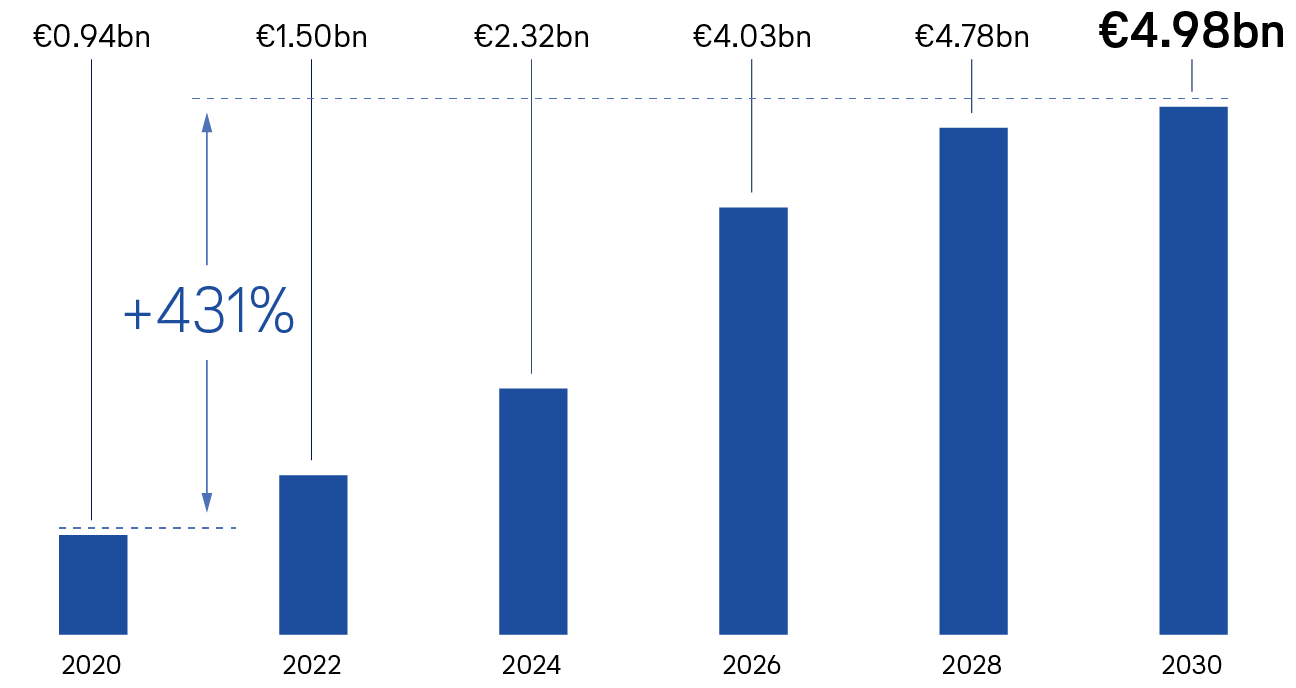
Source: A4E/Steer study (2025) | |
| | | | EU Aviation StrategyA fresh start for a competitive European aviation industryThe European Commission is currently developing a new Aviation Strategy. This provides an opportunity for a much-needed change of course in aviation policy. High regulatory costs, unilateral and excessive climate regulations, and geopolitical conflicts are weighing on Europe’s airlines. The EU Aviation Strategy must therefore create a level playing field. | |
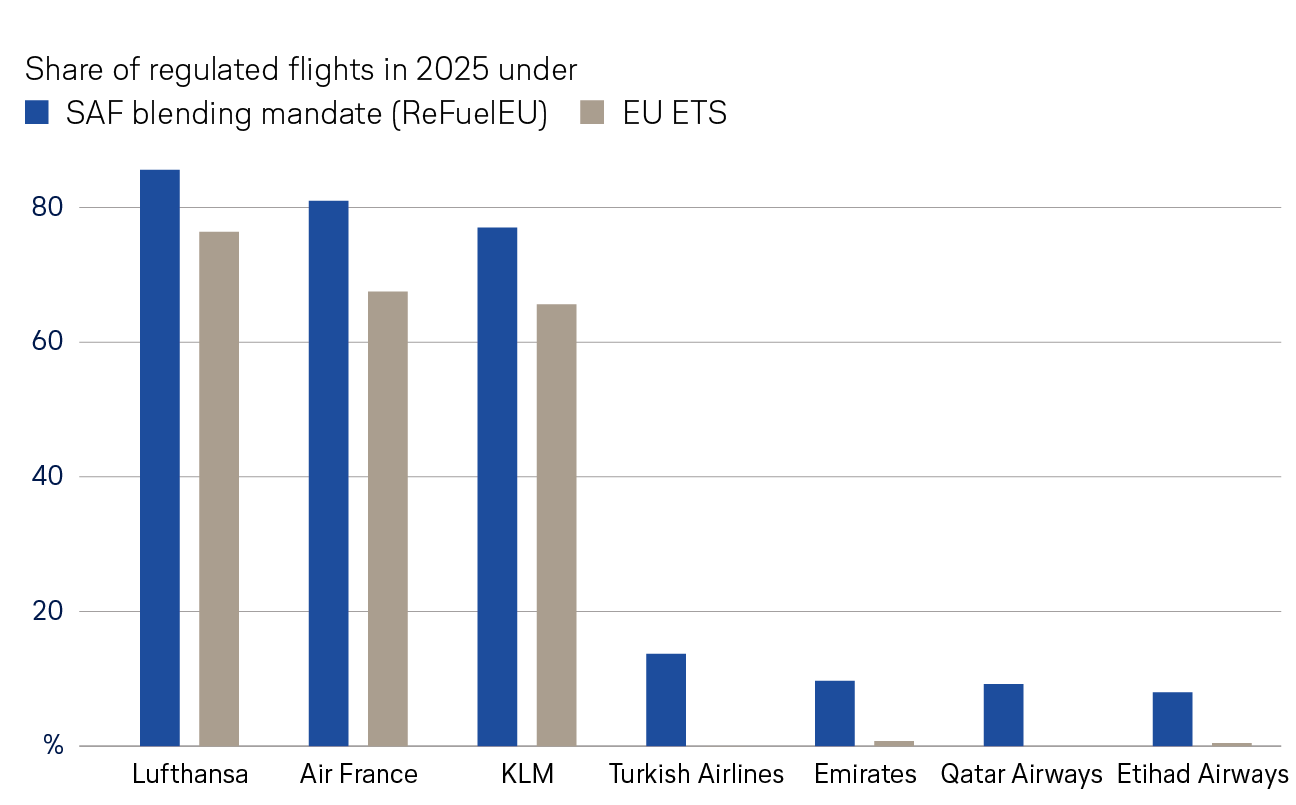
| | | | EU climate regulation places a one-sided burden on EU airlines
 Source: Steer, Aviation Sector Strategic Action Plan (2026) | |
| | | | In the run-up to the strategy, the European Parliament commissioned a study on the competitiveness of the aviation sector. The findings confirm what the industry has been pointing out for years: the EU is burdening its own industry with ever-increasing regulation. Competitors from third countries are far less affected and are capturing market shares. The European Commission itself acknowledges that the aviation industry must be protected from “unfair competition.” EU climate regulations distort competition
The EU pursues the world’s most ambitious climate policy in aviation – with considerable additional costs for European airlines. More than three-quarters of all Lufthansa flights fall under the European Emissions Trading System (EU ETS) and the ReFuelEU Aviation Regulation with its quota for sustainable aviation fuels (SAF); for airlines from third countries, the figure is less than 14 percent. Regulatory costs per passenger are expected to rise from less than 40 cents in 2014 to over 15 euros in 2030. This distorts global competition and shifts traffic and emissions to third countries. SAF remains expensive and scarce
Mandatory blending quotas for sustainable aviation fuels have been in effect in the EU since 2025, with a sub-quota for Power-to-Liquid (PtL) kerosene set to take effect in 2030. The European Parliament’s study shows that SAF currently costs roughly three times as much as fossil kerosene, and PtL is expected to cost more than ten times as much. Furthermore, there is currently no commercial PtL production in Europe. The PtL quota thus faces a lack of availability – exposing EU airlines to potential fines with no corresponding climate benefits. | |
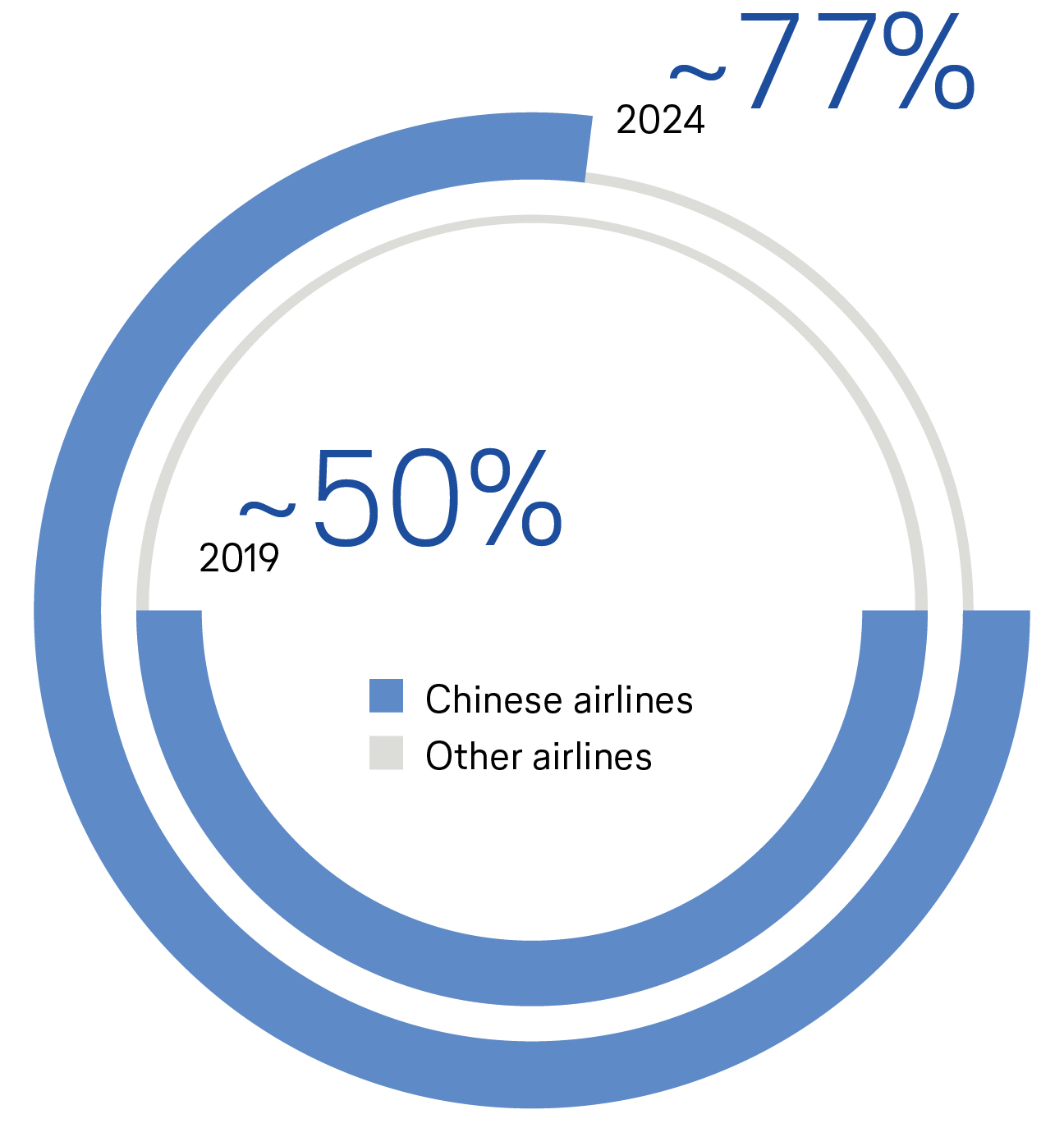
| | | | Market share of Chinese carriers in air traffic between Europe and China
 Source: Steer, Aviation Sector Strategic Action Plan (2026) | |
| | | | Competitive disadvantages caused by Russian overflight ban
Due to political sanctions, EU airlines have been barred from Russian airspace since 2022. The result is longer flight paths, higher costs, and significant competitive disadvantages on key long-haul routes. Here, too, the study confirms that the market share of Chinese airlines on routes between Europe and China has surged from around 50 percent before the pandemic to about 77 percent in 2024. The EU Aviation Strategy must correct this imbalance in international competition: - Make climate protection competition-neutral: EU climate regulations, such as the SAF quota and the EU ETS, must be designed to be competition-neutral. This requires comprehensive reality and competitiveness checks.
- Align aviation policy with global standards: Effective climate action in aviation only works on an international scale. European unilateral action weakens competitiveness and shifts traffic and emissions outside Europe. The EU should therefore align its aviation and climate policies with global standards such as CORSIA.
- Introduce a regulatory moratorium: Regulatory costs for European airlines have risen by 11 percent annually over the past decade – nearly three times as fast as passenger numbers. Existing burdens must be reduced, and additional ones avoided.
- Ensure strategic autonomy: Competitive European network airlines and hubs are essential for independent connectivity. Given the geopolitical risks, they need to be strategically strengthened.
Brussels must now ensure that these principles are embedded in the EU Aviation Strategy. Only fair framework conditions can secure Europe’s sovereignty, competitiveness, and connectivity in the long term. | |
| | | | Additional costs per passenger for European airlines (A4E airlines) due to EU climate regulation*
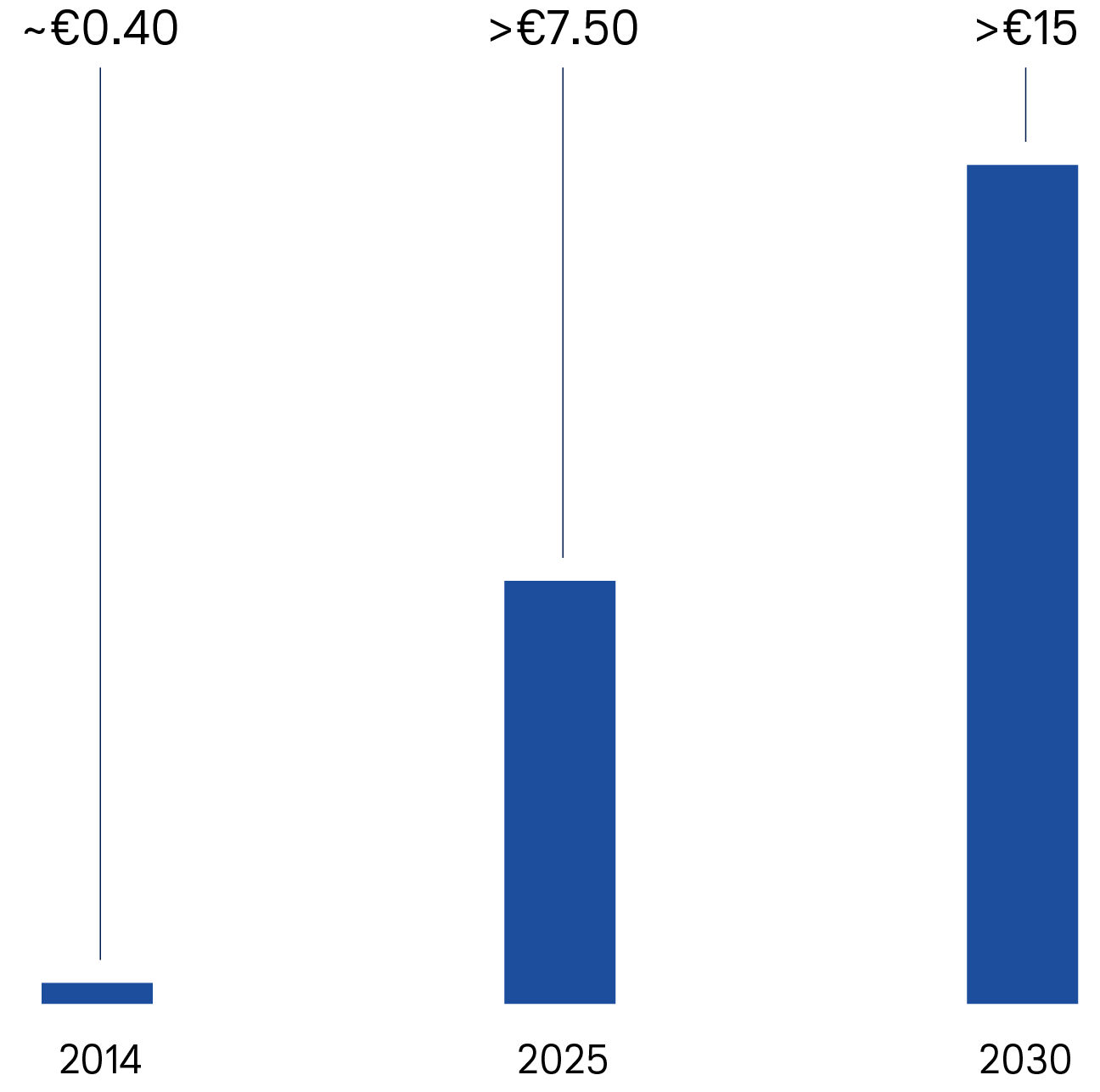
*SAF blending mandate (ReFuelEU Aviation), EU ETS, and MRV system for CO₂ and non-CO₂ effects;
Source: Steer, Aviation Sector Strategic Action Plan (2026) | |
| | | | A nationwide economic partnerThe Lufthansa Group in GermanyWhen people think of Lufthansa, they usually picture the major hubs in Frankfurt or Munich. Yet Europe’s largest aviation group is deeply rooted across many of Germany’s economic regions. | |
| | | | The Lufthansa Group is present across Germany
Selected locations include:
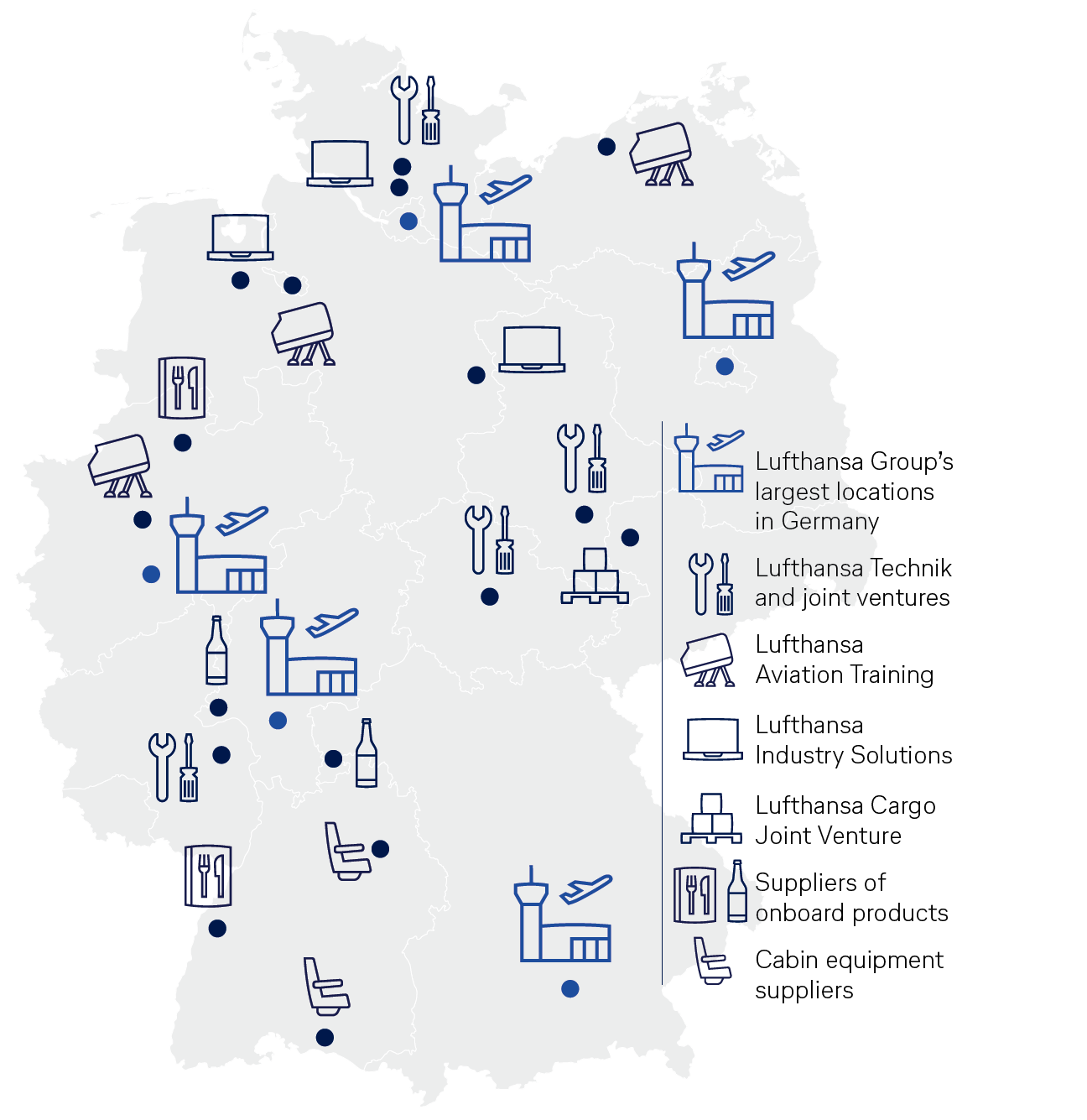 | |
| | | | The Lufthansa Group has a presence in nearly every German state. Through its own companies, subsidiaries, long-standing partnerships, and a tightly knit network of suppliers and service providers, it is an integral part of the German economy. Across various industries, Group subsidiaries and partner companies contribute significantly to productivity, value creation, and employment, making them strong partners for many regions. The Lufthansa Group’s technical and IT services, for example, along with production sites for onboard products, can be found throughout Germany. After the two hubs in Frankfurt and Munich, the Lufthansa Group’s largest German locations are Hamburg, Cologne, and the Berlin metropolitan area. A total of around 2,000 Lufthansa employees live and work in Berlin and Brandenburg. Every major Group company is represented here. In addition to its headquarters in Hamburg, Lufthansa Technik (LHT) has a presence in other German states as well. In Thuringia, for example, approximately 1,200 employees maintain and overhaul state-of-the-art engines used around the world as part of a joint venture with Rolls-Royce (N3 Engine Overhaul Services). In Rhineland-Palatinate, Lufthansa Technik Aero Alzey, with more than 700 employees, has become a highly specialized center for maintaining specific engine types. In Schleswig-Holstein, the joint venture Lufthansa Technik Intercoat is developing innovative materials and surface technologies for the aviation industry. Building on its growing partnership with the German Armed Forces, Lufthansa Technik Defense will further expand its presence at Bundeswehr bases, including Nordholz (where the P-8A “Poseidon” maritime patrol aircraft is stationed), Cologne-Wahn (Special Air Mission Wing), and Saxony/Saxony-Anhalt (“Chinook” heavy-lift transport helicopter). At Dresden Airport, Lufthansa’s partner Elbe Flugzeugwerke shows how Saxony’s expertise is helping to shape the future of aviation. More than 2,000 employees there maintain and modernize aircraft and, among other things, are equipping the Airbus A380 – the largest aircraft in the Lufthansa fleet – with a new Business Class cabin. The IT subsidiary Lufthansa Industry Solutions, which supports companies with digital and industrial solutions, also has several German locations. Its headquarters are in Norderstedt, Schleswig-Holstein. The company runs additional offices in Wolfsburg and Oldenburg in Lower Saxony, among others. Aircraft seats and other cabin furnishings come from southern Baden-Württemberg. The well-known aperitif “Ziegler Avionic” comes from northern Swabia, with Lufthansa serving over 400,000 liters of it annually. Selected Riesling wines served on Lufthansa flights come from the Rheingau region in Hesse. Fish specialties from Hamburg as well as snacks and other onboard products from North Rhine-Westphalia and Bavaria round out the offering – to name just a few examples. All of this shows that the Lufthansa Group’s contribution to Germany extends far beyond air travel. | |
| | | | ILA Berlin 2026Chancellor Merz presents Aviation StrategyIn the presence of German Chancellor Friedrich Merz, Airbus and the Lufthansa Group further strengthened their strategic partnership at ILA Berlin. For 50 years, this collaboration has helped shape European aviation. The next milestone is already on the horizon: the delivery of the 700th Airbus aircraft to the Lufthansa Group. | |
| | | | 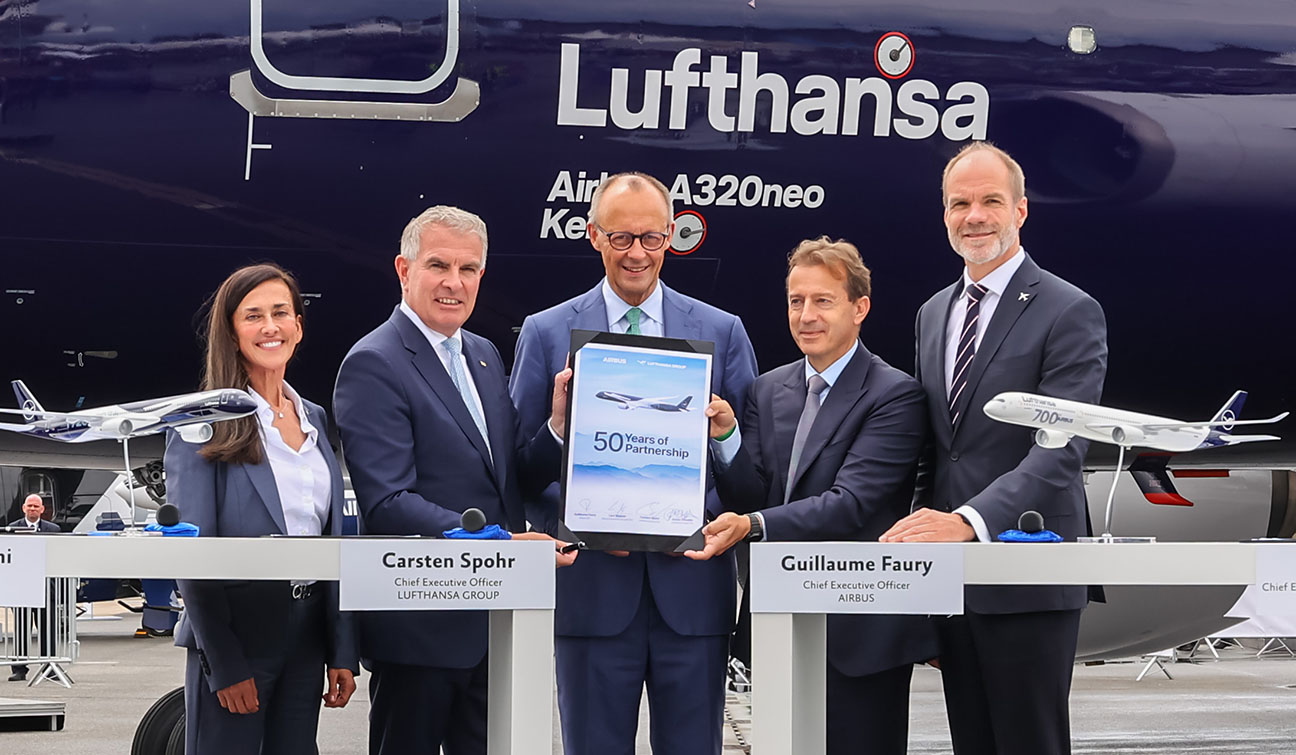
Left to right: Grazia Vittadini, Chief Technology Officer of the Lufthansa Group; Carsten Spohr, Chairman of the Executive Board of the Lufthansa Group; Friedrich Merz, German Chancellor; Guillaume Faury, Chief Executive Officer of Airbus; Lars Wagner, Chief Executive Officer Commercial Aircraft at Airbus | |
| | | | This success story shows that long-term partnerships, technological innovation, and joint investment create competitiveness, economic value, and high-quality jobs – in Germany and across Europe. To ensure this continues, aviation needs a reliable policy framework. In recent years, Germany as an aviation location has lost significant ground in international competition. Accordingly, the pressure to act is high. With the new National Aviation Strategy, the German government has set the framework. Germany is to become Europe’s leading aviation nation – competitive, technologically strong, sovereign, resilient, and sustainable. Strengthening connectivity and economic value creation
These ambitions must now be backed by concrete measures. Germany’s federal economic regions need strong air connectivity and a competitive industrial base. Relief for domestic hub connections, which are particularly affected by high operating costs, is essential. As agreed in the coalition agreement, the competitive-neutral reform of the European SAF blending mandates must also be launched without delay. | |
| | | | “The aviation industry is an industry of innovation, and it is a growth sector like no other at present in Germany and Europe. I repeat the projections I cited just a few weeks ago at Lufthansa’s 100th anniversary celebration in Frankfurt: global air traffic will double again by 2050. Over the next 20 years, more than 40,000 new aircraft will be needed worldwide.” German Chancellor Friedrich Merz
at the opening of ILA Berlin | |
| | | | More destinationsEurowings expands its winter scheduleGermany’s leading leisure airline is expanding its route network from the end of October, with several new direct connections from Berlin, Hamburg, Cologne/Bonn, Hanover, and Stuttgart. | |
| | | | From Berlin and Hamburg, passengers will be able to fly nonstop to Jerez de la Frontera in Andalusia. Cologne/Bonn will gain two new routes: Klagenfurt and Pristina, the capital of Kosovo. From Stuttgart, Eurowings will add Cairo to its winter schedule with two weekly flights. From early November, the Lufthansa Group airline will connect Hanover, too, directly with the Egyptian capital. Alicante on Spain’s Mediterranean coast will also be added to the winter program from Hanover. Eurowings will share more details of its 2026/27 winter schedule in the coming weeks. | |
| | | | SustainabilitySWISS advances synthetic aviation fuelsSWISS is teaming up with Swiss technology company Metafuels to accelerate the market ramp-up of synthetic aviation fuels. | |
| | | | Methanol-to-Jet-Process 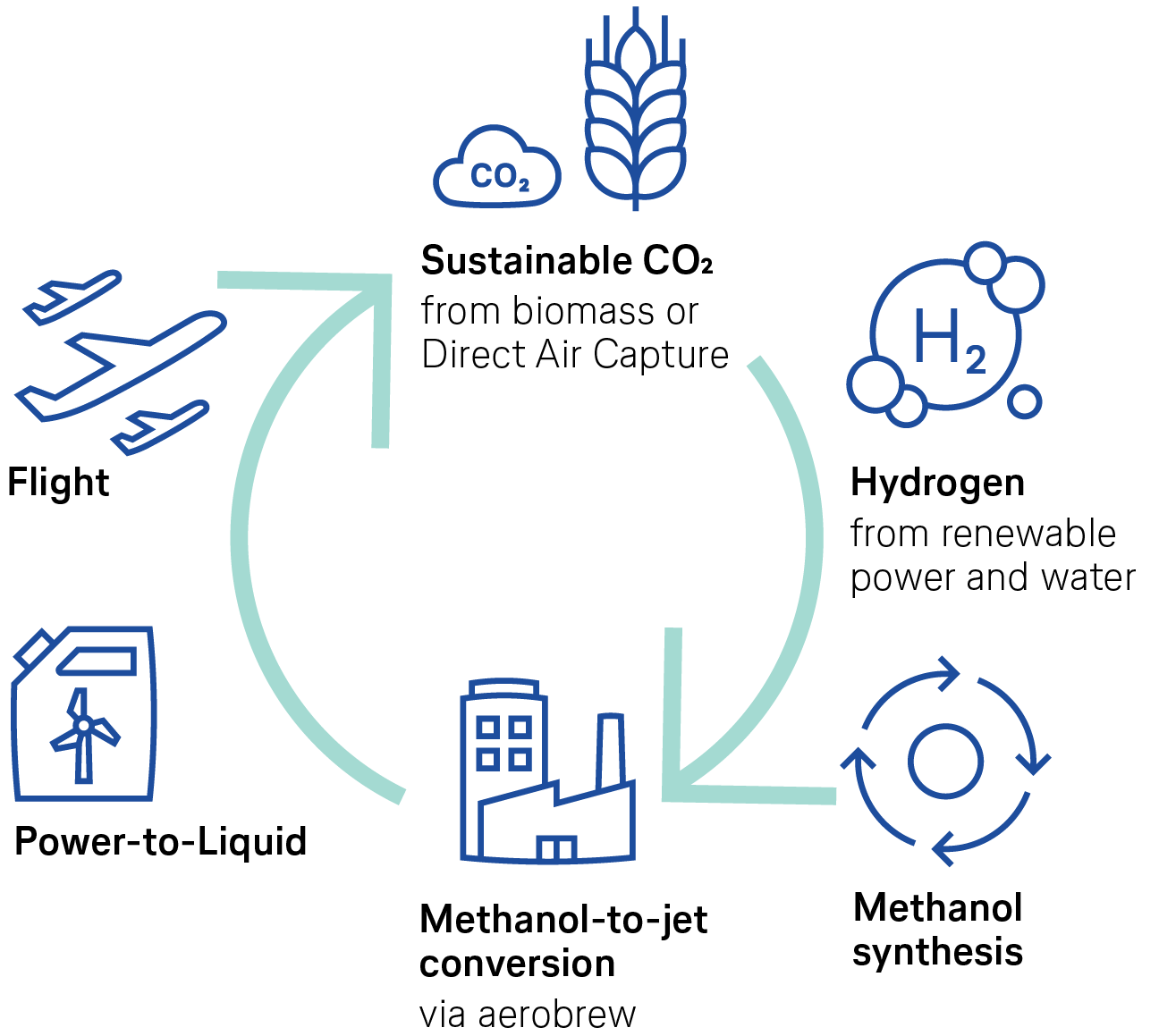
Source: SWISS | |
| | | | The Lufthansa Group subsidiary SWISS will collaborate with Swiss technology company Metafuels. The goal of the partnership is to advance the development and scaling of Power-to-Liquid (PtL) fuels. Metafuels has developed the so-called “aerobrew” process for this purpose. It converts green methanol into PtL that can be used in existing aircraft. A demonstration plant is currently under construction at the Paul Scherrer Institute in Villigen, Switzerland, and the company is planning its first commercial production facility in Rotterdam. SWISS and the Lufthansa Group are also exploring long-term SAF offtake agreements. The ramp-up of PtL fuels is still in its early stages. In the future, sustainable aviation fuels must be made available much faster, at affordable prices, and on a significantly larger scale. | |
| | | | On July 8, 2011, the Lufthansa Airbus A340-300 registered “D-AIGT” took off for the first time with the IAGOS measurement system on board. Today, up to three Lufthansa Group aircraft collect atmospheric data around the globe every day for the European research program. Some 400 organizations worldwide draw on these measurements to refine climate models, improve weather forecasts, and analyze long-term changes in the atmosphere. The Lufthansa Group’s commitment began as early as 1994 with MOZAIC, the predecessor project to IAGOS. Since then, more than 37,500 measurement flights have been carried out on scheduled passenger flights. Working with partners from academia and research, the Lufthansa Group aims to better understand the impact of aviation on the atmosphere and climate – and to turn those scientific findings into further improvements in flight operations. | |
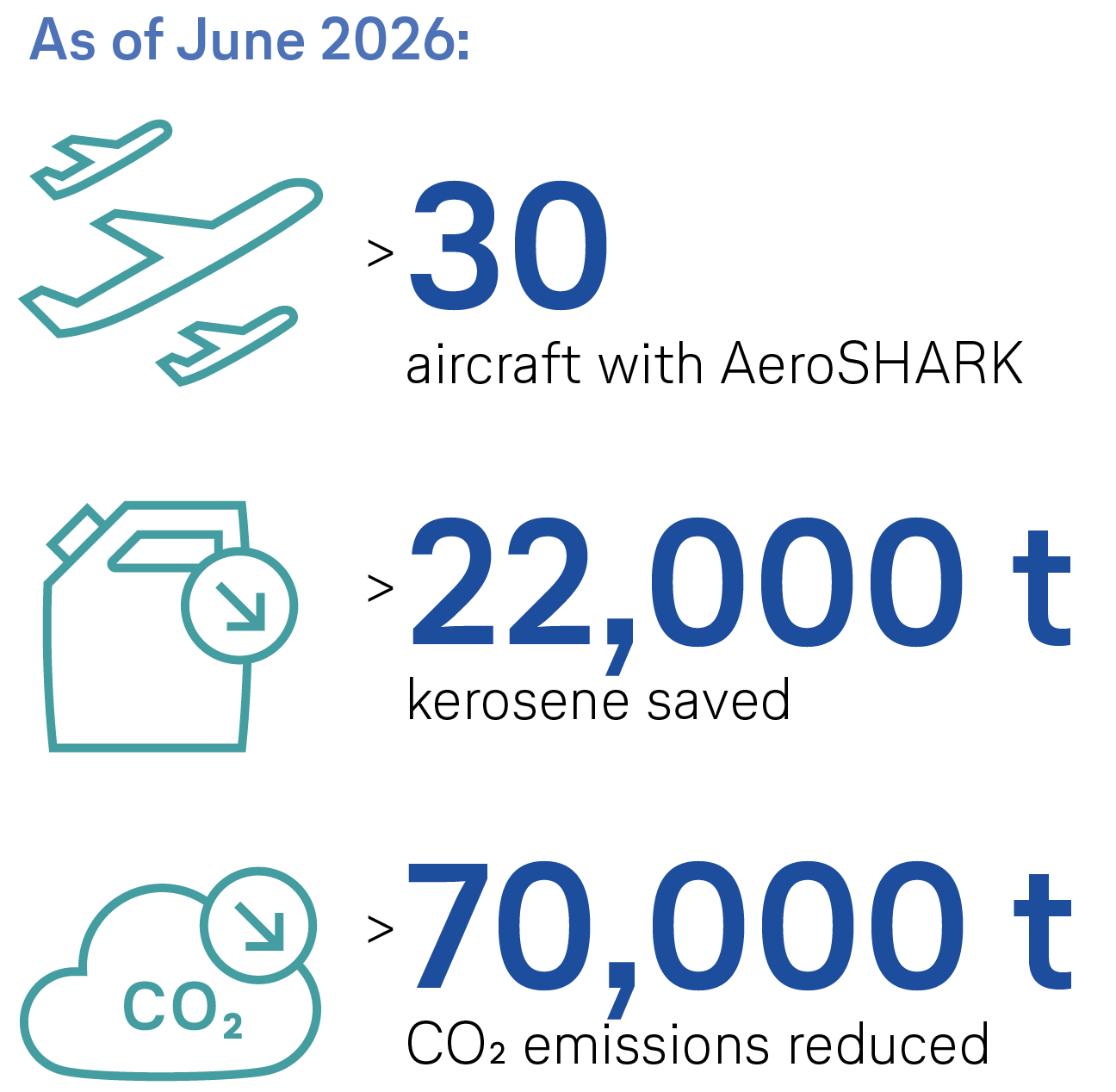
| | | | To this end, Lufthansa Technik and Airbus have agreed on a technical collaboration. The AeroSHARK surface film, developed by the Lufthansa Group subsidiary together with BASF, mimics the structure of sharkskin. Its surface texture reduces aerodynamic drag and thus lowers fuel consumption. To date, AeroSHARK has been applied to the fuselage and engine nacelles of Boeing aircraft. Going forward, Lufthansa Technik and Airbus plan to extend the application of the coating to the wings and tailplanes of the Airbus A330ceo. Fully modified A330ceo aircraft could save more than two percent of kerosene on typical long-haul flights. AeroSHARK is currently the only riblet technology certified for commercial aviation and is already in service on more than 30 aircraft operated by various airlines. By June 2026, aircraft equipped with the sharkskin technology had accumulated more than 375,000 flight hours, saving over 22,000 metric tons of kerosene and reducing CO2 emissions by more than 70,000 metric tons. | |
| | | | Lufthansa GroupYour Contacts PDF PDF

Andreas Bartels
Head of Corporate
Communications
Lufthansa Group  +49 69 696-3659 +49 69 696-3659
 andreas.bartels@dlh.de andreas.bartels@dlh.de
| 
Dr. Kay Lindemann
Head of Corporate International
Relations and Government Affairs
Lufthansa Group +49 30 8875-3030
kay.lindemann@dlh.de
|

Martin Leutke
Lufthansa Group &
Lufthansa Airlines
Communications +49 69 696-36867
martin.leutke@dlh.de
| 
Jan Körner
Head of Government
Affairs Germany
Lufthansa Group
+49 30 8875-3212
jan.koerner@dlh.de |

Sandra Courant
Head of Political Communication
and Media Relations Berlin
Lufthansa Group +49 30 8875-3300
sandra.courant@dlh.de
| 
Ruben Schuster
Head of EU Liaison Office
Lufthansa Group
+32 492 228141
ruben.schuster@dlh.de |
| |
| | | | Published by:
Andreas Bartels
Head of Corporate Communications
Lufthansa Group Dr. Kay Lindemann
Head of Corporate International
Relations and Government Affairs
Lufthansa Group Martin Leutke
Lufthansa Group &
Lufthansa Airlines
Communications
Deutsche Lufthansa AG
BER CP, Konzernrepräsentanz
Lennéstraße 3, D-10785 Berlin | Editor in chief
Sandra Courant Editorial staff
Frederik Fink, Batughan Güler, Emilia Lehmus, Thrasivoulos Malliaras, Marie-Charlotte Merscher, Dr. Christoph Muhle, Philipp Struve Press date
8 July 2026 Agency partner
Köster Kommunikation |
| |
| | | | Received the policy letter via forwarding? Subscribe here for free. | |
|