| | | | Policy BriefSeptember 2026 | |
| | | |
Dear Readers,
Geopolitical crises, closed airspace, expensive jet fuel – the situation in global aviation is under strain. European airlines are also facing steadily rising government-imposed charges and regulatory requirements, further intensifying competitive pressure. The picture in Germany is particularly bleak: Due to exceptionally high taxes and fees, German aviation currently ranks last in Europe. This not only hurts the industry itself, but also weakens the international connectivity of many metropolitan regions and the companies based there. Reversing this trend and keeping value creation in Germany will require urgent joint action by the federal and state governments. A course correction in European aviation policy is equally overdue. Instead of strengthening the competitiveness of German airlines and airports, the Federal Government has now decided to grant an airline from the United Arab Emirates additional landing rights in Berlin. Why this could lead not to greater connectivity – as is repeatedly argued, particularly in the capital – but to less, is explained in this Policy Brief. For more than 60 years, the Lufthansa Group has been a reliable partner of the German Armed Forces. Lufthansa Technik helps ensure the operational readiness of military aircraft, while Lufthansa Aviation Training trains pilots to the highest standards. As civilian aviation expertise becomes increasingly important to the operational readiness of the armed forces, we are steadily expanding our cooperation with the Bundeswehr. In this issue, we introduce three new projects. Enjoy the read! Andreas Bartels
Head of Corporate Communications
Lufthansa Group | Dr. Kay Lindemann
Head of Corporate International Relations
and Government Affairs
Lufthansa Group
|
| |
| | | | Aviation in GermanySafeguarding hub connectivityAnyone seeking to connect Germany’s regions to the rest of the world must secure their links to Germany’s hubs. Where feeder services disappear, more is at stake than air connectivity: competitiveness, investment, and value creation are also affected. | |
| | | | Passenger numbers decline
In the first half of 2026, passenger numbers at German airports fell for the first time since the pandemic. 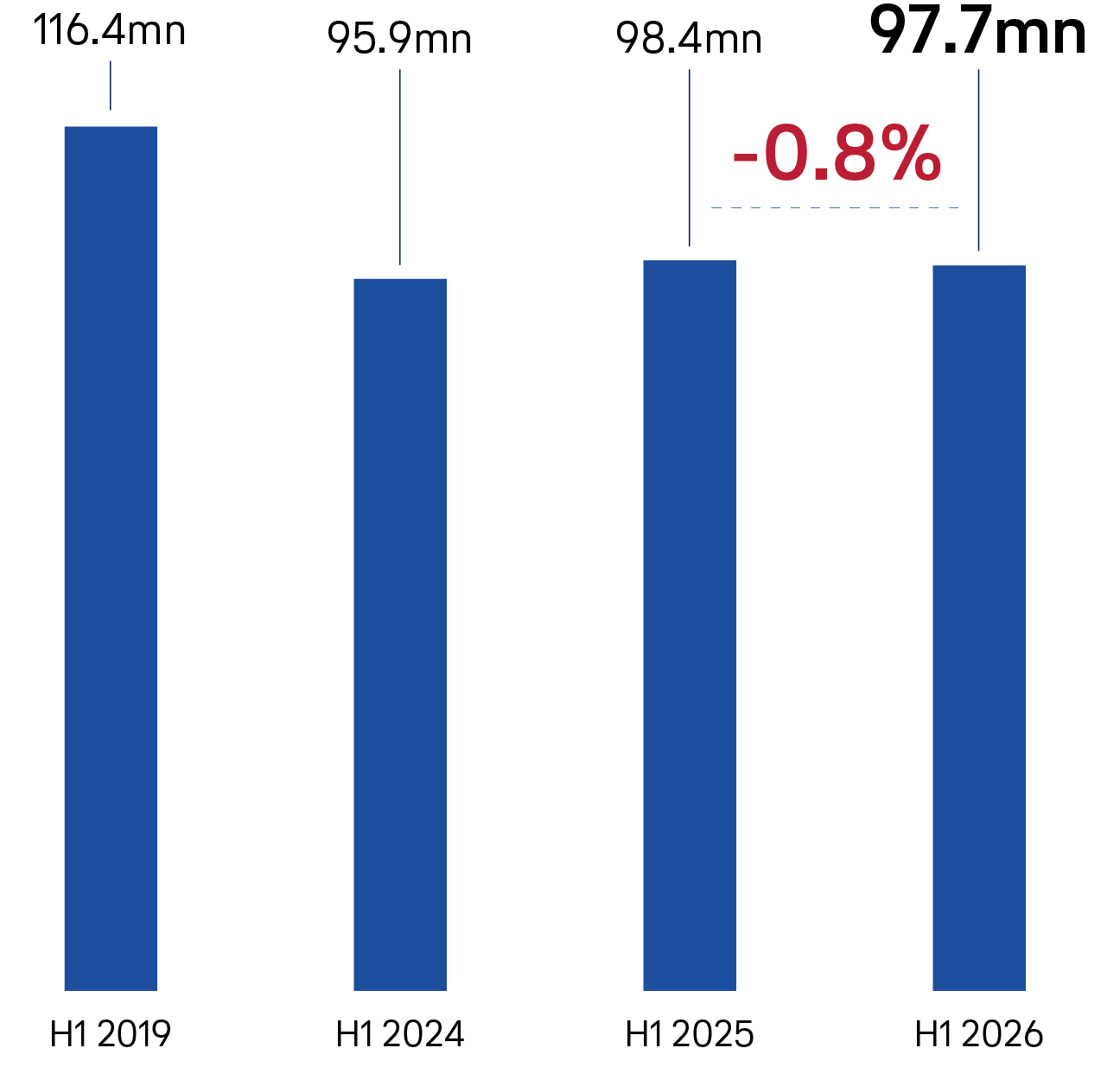
Source: BDL / German Airports Association (ADV), excluding Frankfurt-Hahn Airport (HHN). | |
| | | | Germany continues to impose higher taxes and charges on aviation than almost any other European country. Although the German CDU-SPD coalition government has acknowledged the issue and partially reversed the increase in aviation tax, this does not represent a genuine change in policy. A medium-haul departure from Bremen, Hannover, Stuttgart, Dusseldorf or Dresden still costs several times as much as airlines pay in Barcelona or Istanbul. Connectivity as a competitive factor
The high state-induced operating costs are also putting domestic feeder connections to the hubs in Frankfurt and Munich on an increasingly precarious economic footing. When such links are lost, the impact extends beyond the cancellation of a flight service; it translates into a structural disadvantage for the affected region. International connectivity declines, weakening a key foundation for investment, economic growth, and value creation. The fact that competing airlines are not stepping in to fill the resulting gaps in air services makes one thing clear: Germany has a structural cost problem. Since 2019, government-imposed taxes and charges in the aviation sector have doubled. Ultimately, it is not just aviation that pays the price. The cost is also borne by industry and businesses across Germany’s regions. Federal and state governments must act together
In light of the persistent cost pressures, federal states such as Bremen, Saxony, Saxony-Anhalt, Lower Saxony, North Rhine-Westphalia and Baden-Württemberg require swift support. Otherwise, further cutbacks to air connectivity are likely. Many states have already begun to respond, including by transferring responsibility for security screening to airports themselves to improve operational efficiency. At the same time, an increasing number of airport operators are revising their fee structures. However, these measures alone will not be enough. To halt this trend, the federal government must introduce targeted relief measures that deliver the greatest possible impact. One important lever is air navigation charges. The federal government could cover the basic operating costs of DFS, Germany’s air navigation service provider, substantially reducing the burden of charges on airlines. In addition, hub connections within Germany could be exempt from terminal air navigation charges. The financial outlay would be manageable, while the benefits would be considerable. Germany’s regions need connectivity
Germany’s federal economic structure relies on efficient international connections. Regions connected to Germany’s hub airports have access to global markets and are more attractive to businesses, investment and skilled workers. Therefore, anyone serious about strengthening Germany as a business location must safeguard its hub connections. International competitiveness does not begin at the hub. It begins in the regions. Public Service Obligations: A proven instrument for regional connectivity in Europe
Public Service Obligations (PSOs) enable national, regional or local authorities to provide financial support for air services where it is justified by the public interest. - Legal framework: EU Regulation (EC) No. 1008/2008 allows Member States to impose PSOs on air routes that are of particular importance to regional connectivity.*
- Requirement: The air service in question must be of particular importance for the economic development and accessibility of a region. It must also be commercially unsustainable in the long term and lack an adequate alternative transport service.
- Practice across Europe: Many EU Member States make extensive use of this instrument. The European Commission’s most recent comprehensive overview (as of March 2024) lists 37 PSO routes in France alone, 28 in Greece, 23 in Spain, 21 in Portugal, 19 in Italy, and 12 each in Croatia and Sweden.
- And Germany? At present, no domestic air route in Germany is operated as a PSO. The last state-supported route came to an end around 15 years ago.
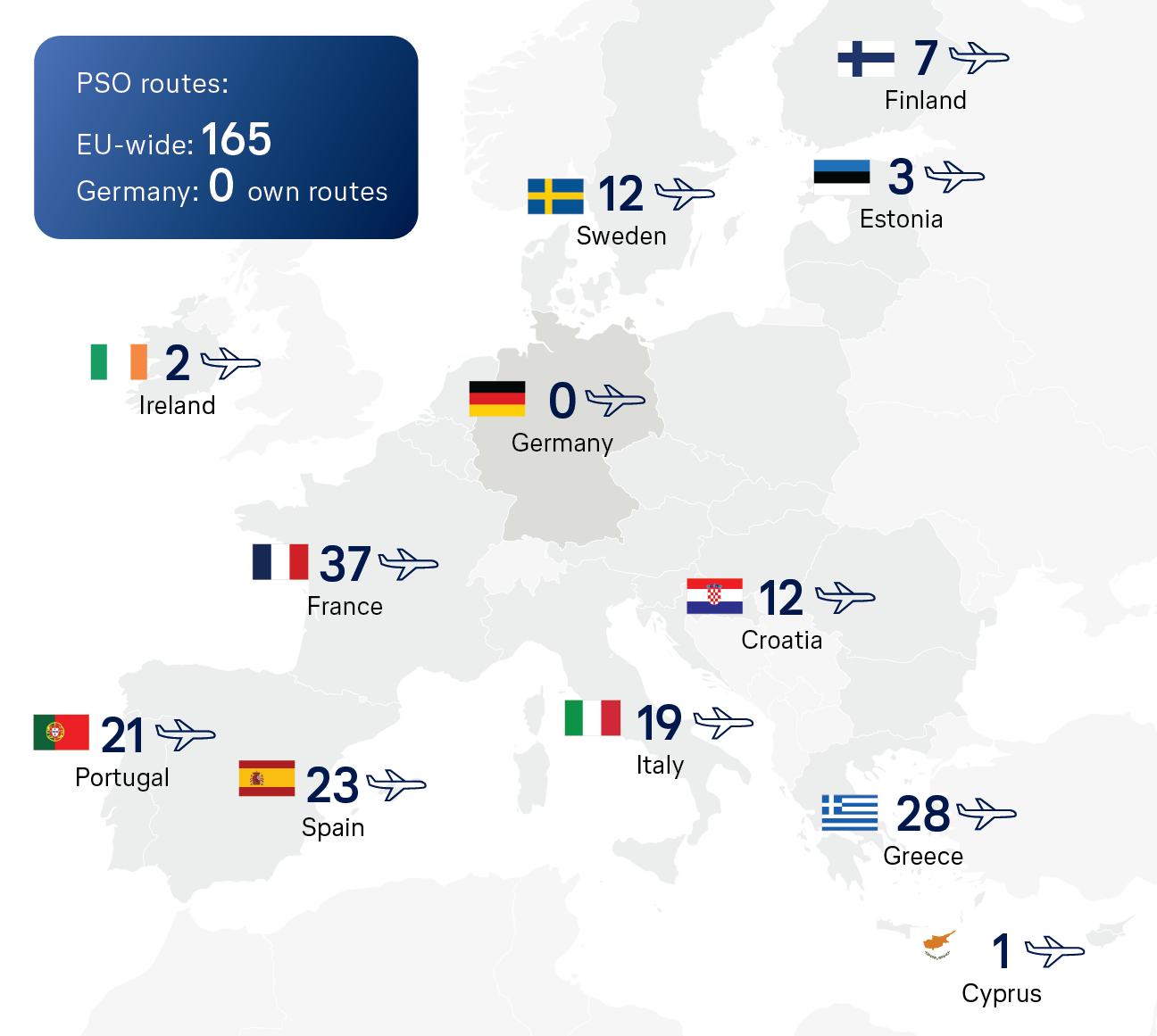
*Articles 16 et seq. of Regulation (EC) No. 1008/2008. Source: European Commission; as of March 2024. | |
| | | | UAE traffic rightsUnequal competition shifts value creationNo other EU Member State is served by airlines from the United Arab Emirates (UAE) as frequently as Germany. Nevertheless, a UAE carrier is being granted additional landing rights for Berlin. This is a decision that runs counter to the interests of Germany as a business location.“Germany and Europe are to become global leaders in aviation.” This is the objective of the Federal Government’s Aviation Strategy, which was presented in June. It describes air transport as a “strategic key industry” for sovereignty, security and long-term viability. Unfortunately, the Federal Government’s welcome recognition of the sector’s importance contrasts with the continued lack of concrete policy decisions. Germany’s aviation sector is steadily losing ground as a result of high government-imposed costs. At the European level, the necessary course correction to address competition-distorting regulatory requirements such as the Emissions Trading System (ETS) and sustainable aviation fuel (SAF) blending mandates has yet to materialize. The consequence: Europe is losing value creation, while state-backed competitors from the Gulf and the Bosporus are benefiting. Against this backdrop of unfair competition, the Federal Government is opening yet another door to a state-owned Gulf carrier by allowing it to serve Berlin. The benefits are one-sided. German airlines operate under entirely different conditions than their competitors from the UAE. Germany has more than seven times the population of the UAE. In the UAE, there are no trade unions, no right to strike and no collective bargaining coverage. Social and environmental standards are likewise not comparable to those in Germany. Adding to this, UAE airlines not only continue to fly through Russian airspace, but also continue to serve destinations in Russia. Emirates alone offers 28 flights per week to Russia – twelve more than before the war broke out. Domestic feeder services face additional pressure
Traffic rights determine far more than just the number of connections between two countries. They influence where people travel, where goods are transported and where capital flows, where value is created, investments are made and skilled jobs are retained. Aviation policy is therefore always also economic, infrastructure and competitiveness policy. The additional connection to the Dubai hub is likely to result primarily in a shift of existing traffic flows. Frankfurt and Munich risk losing transfer passengers. This further exacerbates the already challenging situation for feeder services to Germany’s hub airports, particularly in eastern Germany. What may at first glance appear to be greater connectivity for Germany therefore proves, on closer inspection, to be above all a shift of value creation away from Germany. The foreseeable harm is matched by only limited benefits for Berlin. While Berlin’s Senator for Transport already speaks of a “tangible advantage for the location,” it remains unclear, on closer examination, whether the capital region will actually benefit. Berlin does not gain a single additional direct long-haul connection from the UAE carrier, but merely another connecting option via a hub already served from BER by both Eurowings and Condor. Condor has already responded and will discontinue its Dubai services from Berlin and Stuttgart at the start of the winter schedule. Furthermore, this decision reduces the prospects for genuine direct connections from the German capital’s airport to Asia, a fact that is largely overlooked amid the enthusiasm of the city’s tourism stakeholders. Asian airlines that might consider launching such services must now compete with a state-owned carrier that consolidates traffic from numerous markets at its Gulf hub and has virtually unlimited resources. Responsible economic policy does not open markets for their own sake. It must draw clear boundaries wherever differing state, social and regulatory frameworks structurally distort competition. Its objective must be fair competition that strengthens Germany as a business location and safeguards strategically important infrastructure. With its Aviation Strategy, the Federal Government has articulated the right ambition. It now urgently needs to translate that ambition into action. | |
| | | | From the Germany–UAE Joint Declaration, 11 September 2026:
The German side has “agreed to add an additional fifth point to the route schedule, permitting one UAE national carrier to operate an agreed number of frequencies to the fifth point, in addition to the four existing points in Germany, which will be capped at the current number of frequencies for this carrier.” | |
| | | | Artificial IntelligenceNew technologies in practiceArtificial intelligence has long been part of everyday work at the Lufthansa Group. Three examples from flight operations, administration, and maintenance illustrate how broadly Lufthansa deploys AI. | |
| | | | 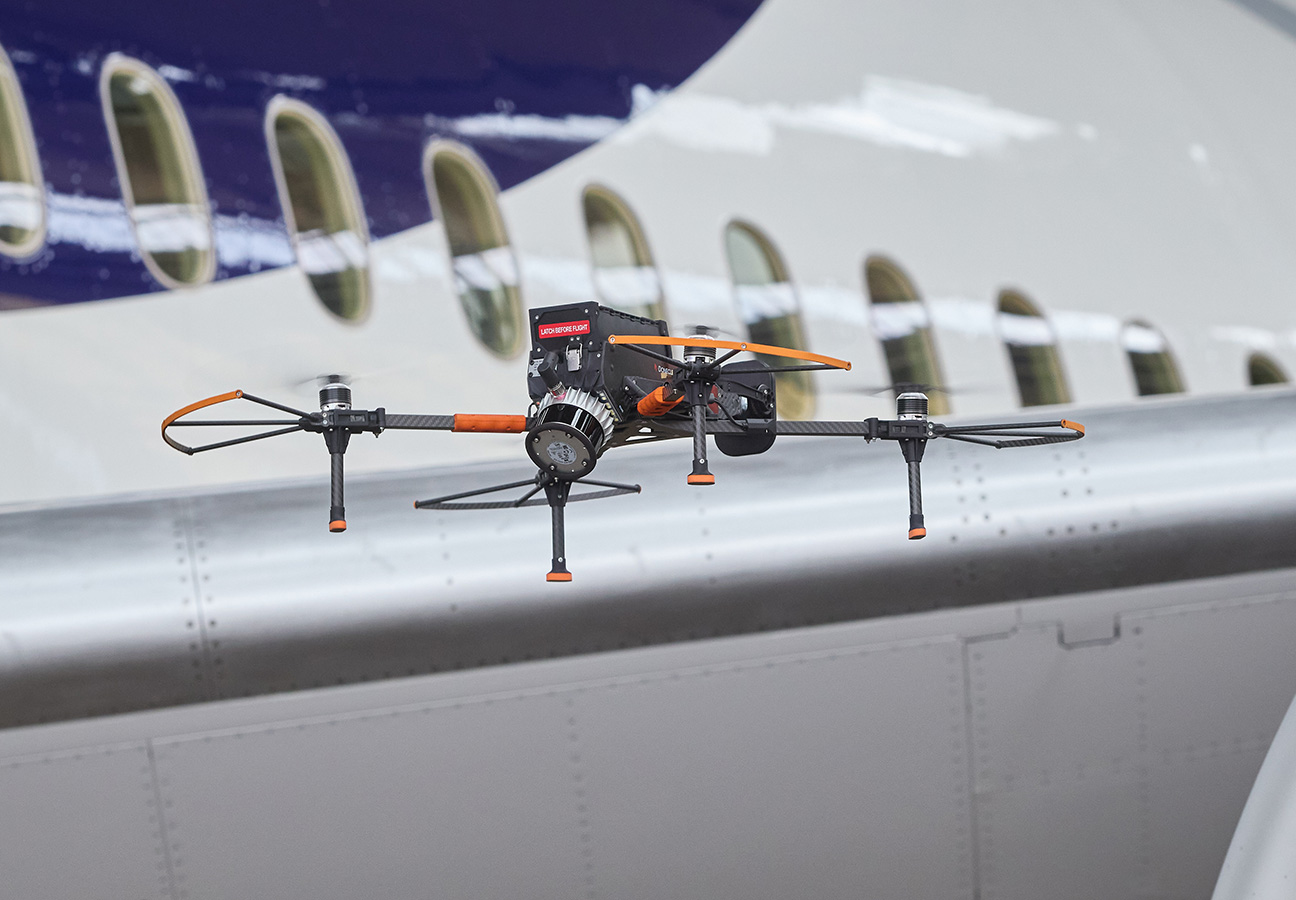
AI-powered drones assist with aircraft maintenance. | |
| | | | Expediting turnaround
Getting an aircraft ready for takeoff again after landing is a complex process. Depending on the aircraft type, turnaround in Frankfurt takes between 35 and 120 minutes. During this time, many tasks carried out by different service providers must be coordinated, ranging from docking the passenger boarding bridge to loading baggage, refueling, and catering. This is exactly where SEER comes in. The AI application, jointly developed by Lufthansa and Fraport, identifies key handling steps using video footage, timestamps them, and generates a precise, real-time overview of ground operations. This allows those involved to identify delays more quickly and take corrective action. As a result, ground handling becomes more predictable and flights more punctual. Making compliance knowledge accessible
Particularly when it comes to compliance and data protection issues, employees need to quickly understand which rules apply and when they need further advice. RITA, an AI-powered advisory system, makes this knowledge available around the clock. The system answers questions based on regulatory requirements and internal guidelines. Since its introduction at the beginning of the year, Lufthansa employees have submitted around 4,000 inquiries. RITA was able to answer about 92 percent of them immediately. Complex cases are transferred to experts, who also regularly review the responses generated by the large language model. The AI does not replace expert judgment but provides initial guidance. This reduces the burden of routine inquiries on specialized teams and makes it easier for employees to seek advice early. Preparing inspections more efficiently
AI also saves time in maintenance. With DroneInspect, a drone scans the aircraft’s exterior in a few minutes using high-resolution cameras, even in areas that are difficult for technicians to access, such as the upper fuselage. AI then analyzes the images and searches for typical damage such as scratches, dents, or traces of lightning strikes. As images of real-world damage are rare and difficult to collect, the computer vision model was also trained on artificially generated images from a 3D simulation. The technology supports inspection preparation, while assessment and decisions remain with the experts. Putting AI into practice responsibly
These examples show that technology provides support, while responsibility remains with people. For such innovations to be adopted more quickly in day-to-day operations in Europe, companies need clear and practical rules. With its risk-based approach, the EU AI Act is fundamentally on the right track. The priority now is to define key terms more clearly and better align existing requirements under the AI Act, the GDPR, and workplace co-determination rules. Europe needs a framework that protects employees, ensures human oversight, and enables companies to introduce and further develop AI with legal certainty. | |
| | | | German Armed ForcesLufthansa Group expands partnershipTraining pilots, supporting heavy-lift helicopters and retrofitting reconnaissance aircraft: The Lufthansa Group is applying its civil aviation expertise to the “Zeitenwende”. | |
| | | | 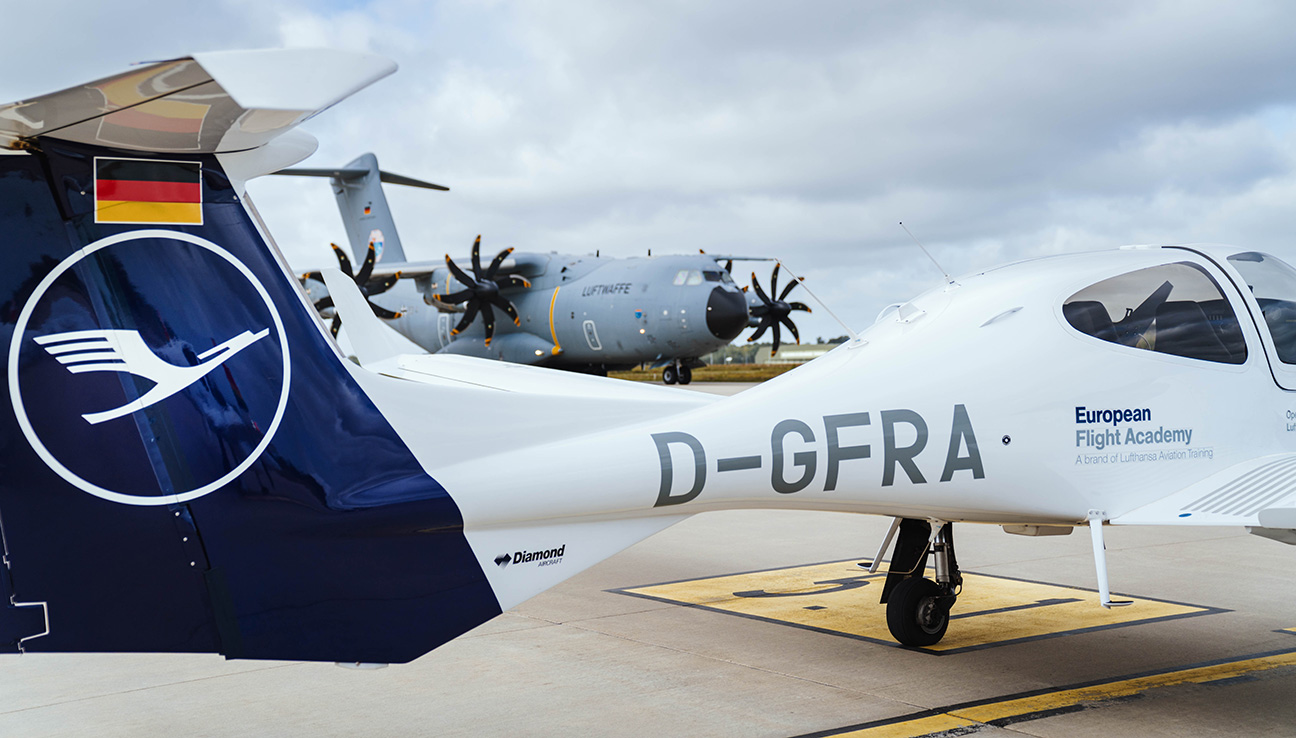
Lufthansa Aviation Training will train approximately 50 Air Force pilots using the Diamond DA40 NG. | |
| | | | Initial Flight Training
Jet pilot training in Rostock-Laage
Starting in February 2027, Lufthansa Aviation Training (LAT) will take over the Initial Flight Training (IFT), the first practical flying phase of pilot training, for approximately 50 prospective jet pilots in the German Air Force. Training will take place in Rostock-Laage on Diamond DA40 NG training aircraft. The curriculum includes meteorology, aviation law, and the basics of mission planning, as well as safe flying under visual flight rules. Many of the instructors were formerly jet pilots in the Air Force themselves. The proximity to the military units also facilitates interaction, as the German Air Force’s 73rd Tactical Wing “Steinhoff” trains Eurofighter crews at the same location. For years, Rostock-Laage has been part of the Lufthansa Group’s training network, where aspiring commercial pilots complete the final phase of their training. Moreover, LAT is already training drone pilots there for the German Armed Forces. The addition of jet pilot training will further expand training activities at the site. | |
| | | | “The German Air Force and Lufthansa have shared a partnership spanning more than 60 years in the training and education of Air Force pilots. We are pleased to continue this professional collaboration at the Rostock-Laage site in 2027.” Brigadier General Henrik Scholz
Head of Capability Development at the German Air Force Command | |
| | | | Chinook
Logistics support for the new helicopter fleet
With the CH-47F “Chinook,” Lufthansa Technik is adding a helicopter model to its maintenance portfolio for the first time. The German Armed Forces are procuring 60 of these heavy-lift transport helicopters from Boeing to transport troops, vehicles, and equipment, among other things. Boeing and Lufthansa Technik Defense are establishing a flexible network of spare parts warehouses for the Chinook in the vicinity of the Bundeswehr bases in Holzdorf (Brandenburg/Saxony-Anhalt) and Laupheim (Baden-Württemberg). Lufthansa Technik Defense will store and transport the parts and supply consumables and operating materials. | |
| | | | 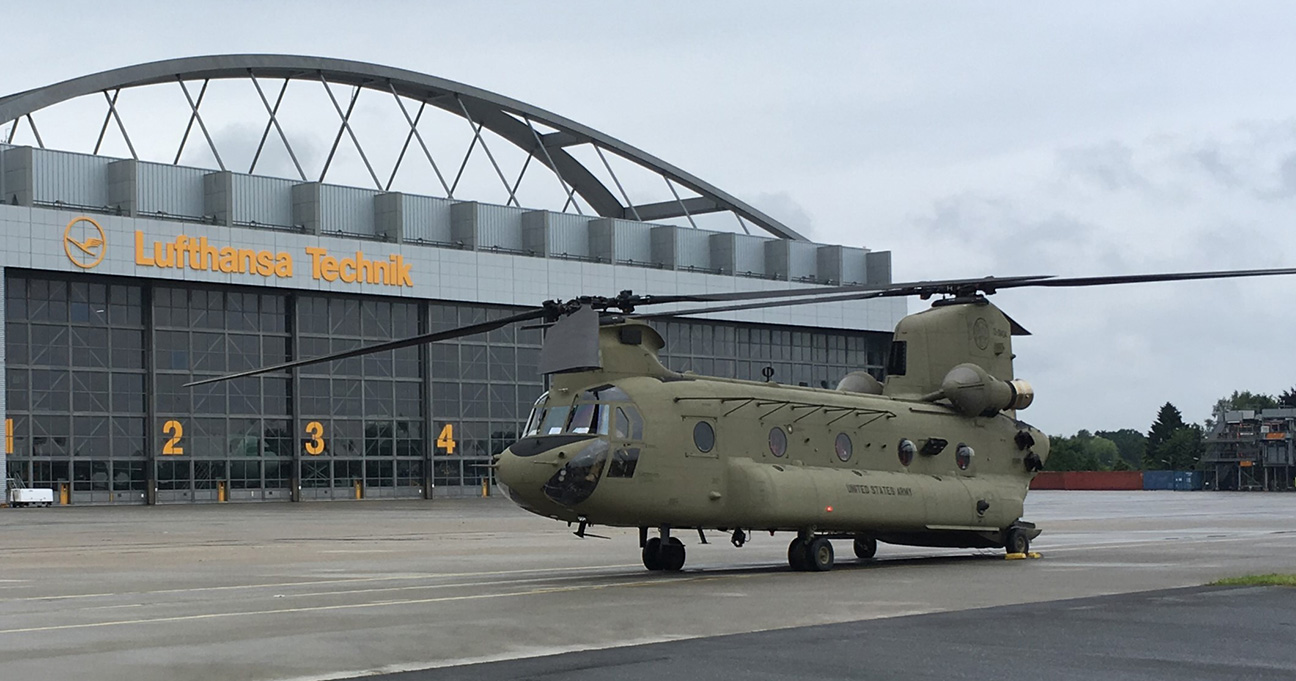
The Bundeswehr’s new CH-47F “Chinook” heavy-lift transport helicopter. | |
| | | | PEGASUS
Training aircraft for future crews
In addition, Lufthansa Technik Defense received another contract from the German Armed Forces this summer to convert a used Bombardier Global 6000 into a training aircraft for the PEGASUS (“Persistent German Airborne Surveillance System”) reconnaissance system. This will enable the Bundeswehr to train its crews without tying up operational aircraft. Lufthansa Technik Defense plans to have the aircraft ready in the fall, with training scheduled to begin later this year. Lufthansa Technik Defense is currently working on the PEGASUS reconnaissance aircraft in Hamburg. At the heart of PEGASUS is the SIGINT (“Signals Intelligence”) system developed by Hensoldt. It detects military radio traffic and radar emissions at long range, thereby providing information for situational assessment and early crisis detection. PEGASUS is scheduled to become operational in 2028. Germany has not had an aircraft capable of this type of reconnaissance since 2010. Hensoldt bears overall responsibility for the project; Lufthansa Technik modifies the aircraft, integrates the reconnaissance technology, installs the mission cabin, and handles civil and military certification. | |
| | | | 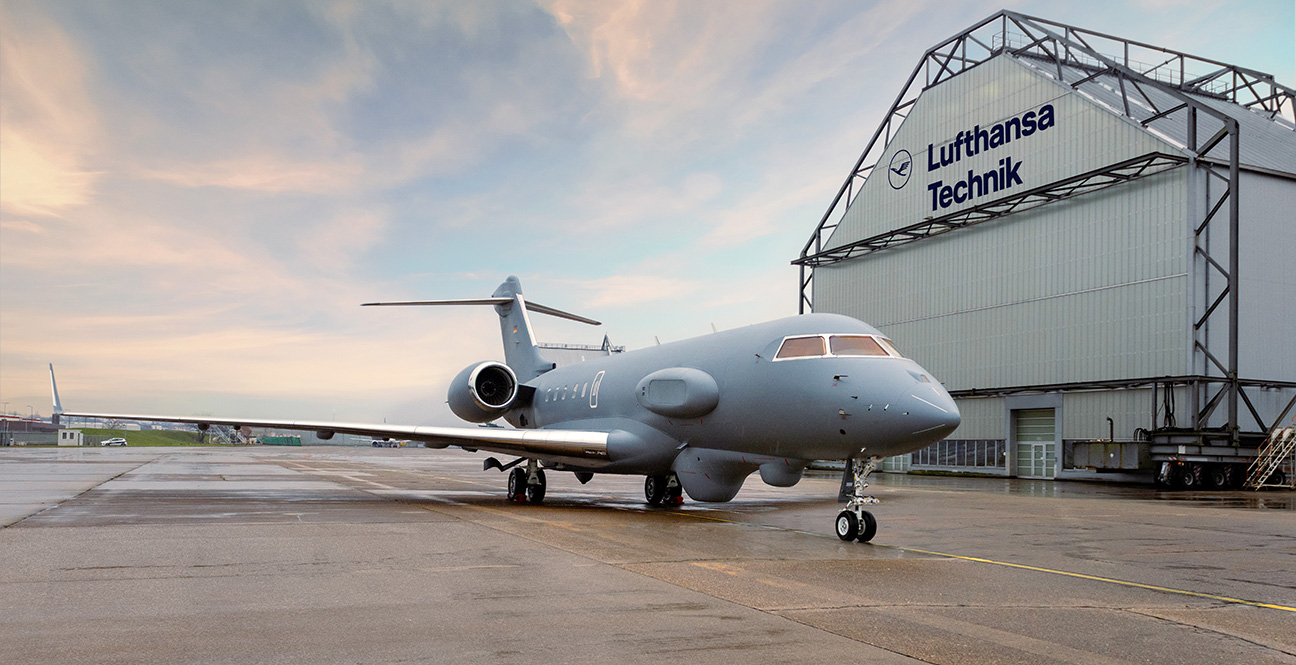
The PEGASUS reconnaissance system will be supplemented by a Global 6000 for training purposes. | |
| | | | Operational readiness does not end with procurement
New aircraft alone do not create defense capability. What matters is whether the armed forces can operate them safely and reliably over the long term. This requires trained personnel, effective maintenance, available spare parts, and robust supply chains. Having these capabilities in Germany is a central part of the “Zeitenwende.” The CH-47F “Chinook” illustrates this particularly clearly: The Budget Committee of the German Bundestag has called for a substantial share of value creation to remain in Germany and for German industry to be involved in the long-term support of the weapons system. This creates a resilient support network between the U.S. and Europe, based on transatlantic partnership, but with industrial strength in Germany. Lufthansa has been working with the Bundeswehr since the early days of the Federal Republic of Germany. For decades, Lufthansa Technik has been providing maintenance services for the Special Air Mission Wing. The partnership now also extends to aircraft such as the German Navy’s P-8A “Poseidon.” In addition, Lufthansa Technical Training (LTT) trains technical personnel for the armed forces. Since this summer, LTT has been certified to train specialists in the maintenance of military aircraft. Lufthansa Aviation Training complements this technical expertise with flight training. With IFT, Chinook, and PEGASUS, the Lufthansa Group is taking its partnership with the German Armed Forces into a new phase, at a time when Germany is restructuring its defense capabilities and civilian aviation expertise is becoming increasingly important for the operational readiness of the armed forces. | |
| | | | Environmental management validated againSustainability at Lufthansa AirlinesLufthansa Airlines has again successfully had its environmental management system validated under the European EMAS standard. The new environmental statement shows how the airline saves fuel and thereby reduces CO2 emissions in its flight operations. | |
| | | | Kerosene savings for Lufthansa Airlines in 2025 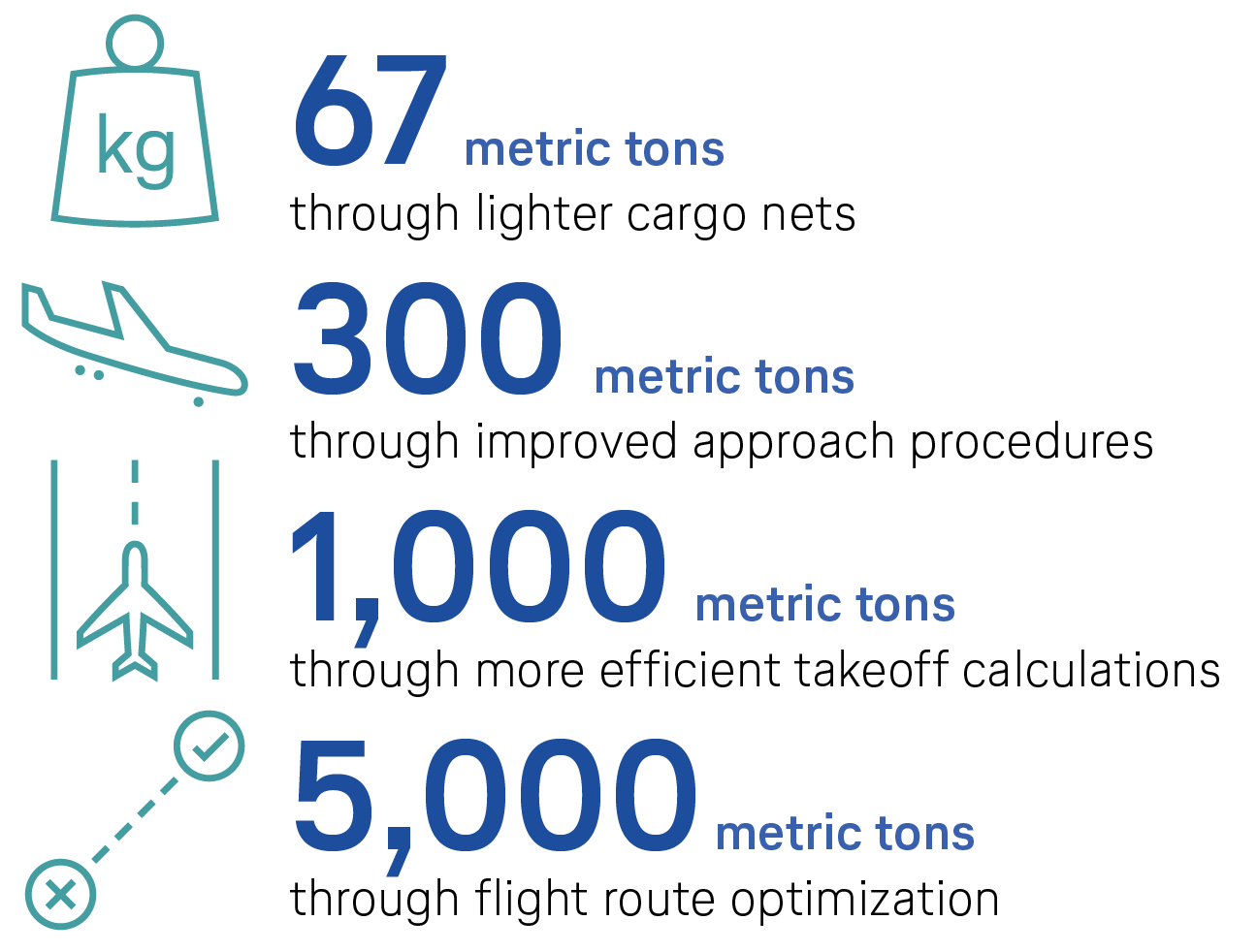
Selection, figures rounded. Source: Lufthansa Airlines’ Environmental Statement 2026. | |
| | | | The EU’s EMAS environmental management system helps participating companies and organizations to monitor their environmental impact and continuously improve their environmental performance. Concrete examples from Lufthansa Airlines’ 2026 Environmental Statement show what this means in practice. For instance, the airline saves fuel by shutting down engines during taxiing after landing. Lower weight also makes a difference: the new cargo nets, for example, weigh around nine kilograms each, only about a third as much as their predecessors, and save more than 67 metric tons of kerosene annually across the Lufthansa Airlines fleet. For the first time, Lufthansa City Airlines and Lufthansa Aviation GmbH, which coordinates flight operations for Lufthansa’s regional airlines, were validated under EMAS (Eco-Management and Audit Scheme), joining Lufthansa Airlines. In 2025, Lufthansa Airlines used an average of just 3.46 liters of fuel to transport one passenger 100 kilometers – its lowest figure ever. | |
| | | | Sustainable aviation fuelDeutsche Bank investsDeutsche Bank invests in the deployment of approximately 1,600 metric tons of sustainable aviation fuel (SAF) with the Lufthansa Group. This will result in CO2 savings of approximately 5,500 metric tons compared to conventional kerosene.With this agreement, both companies are expanding their collaboration in sustainability. Deutsche Bank aims to reduce the climate impact of business travel while simultaneously spurring demand for alternative aviation fuels, since SAF remains significantly more expensive than fossil kerosene and is still limited in availability. In turn, reliable demand creates incentives to produce more SAF. The Lufthansa Group offers companies various options for investing in SAF. Companies can, for example, purchase larger quantities of the alternative fuel and document the resulting CO2 savings in their carbon reporting. The Group also ensures that the SAF is fed into the airport infrastructure within six months and used across its route network. | |
| | | | Growing demand for more sustainable travel options
In 2025, approximately 1,700 companies worldwide invested in SAF through the Lufthansa Group. The volume of SAF sold across all sales channels more than doubled compared to the previous year. | |
| | | | Always onlineLufthansa brings high-speed internet on boardThe Lufthansa Group will soon offer high-speed internet to all passengers, enabling web surfing, cloud-based work, and movie streaming even above the clouds.Since August, the first Lufthansa aircraft, the Airbus A320neo “D-AINM,” has been operating in regular service with Lufthansa Group Wi-Fi. The satellite-based “Starlink” technology brings passengers on-board internet that is, in many cases, faster than their connection at home and supports data-intensive applications. For Miles & More members and Travel ID users, the new Lufthansa Group Wi-Fi is free in all travel classes. High-speed internet is expected to be available on up to ten additional aircraft in the A320 family operated by Lufthansa and Lufthansa City Airlines before the end of this year. By 2029, roughly 850 aircraft are expected to be equipped with the new high-speed internet – a milestone that will make the Lufthansa Group the largest airline group in Europe to use “Starlink.” | |
| | | | 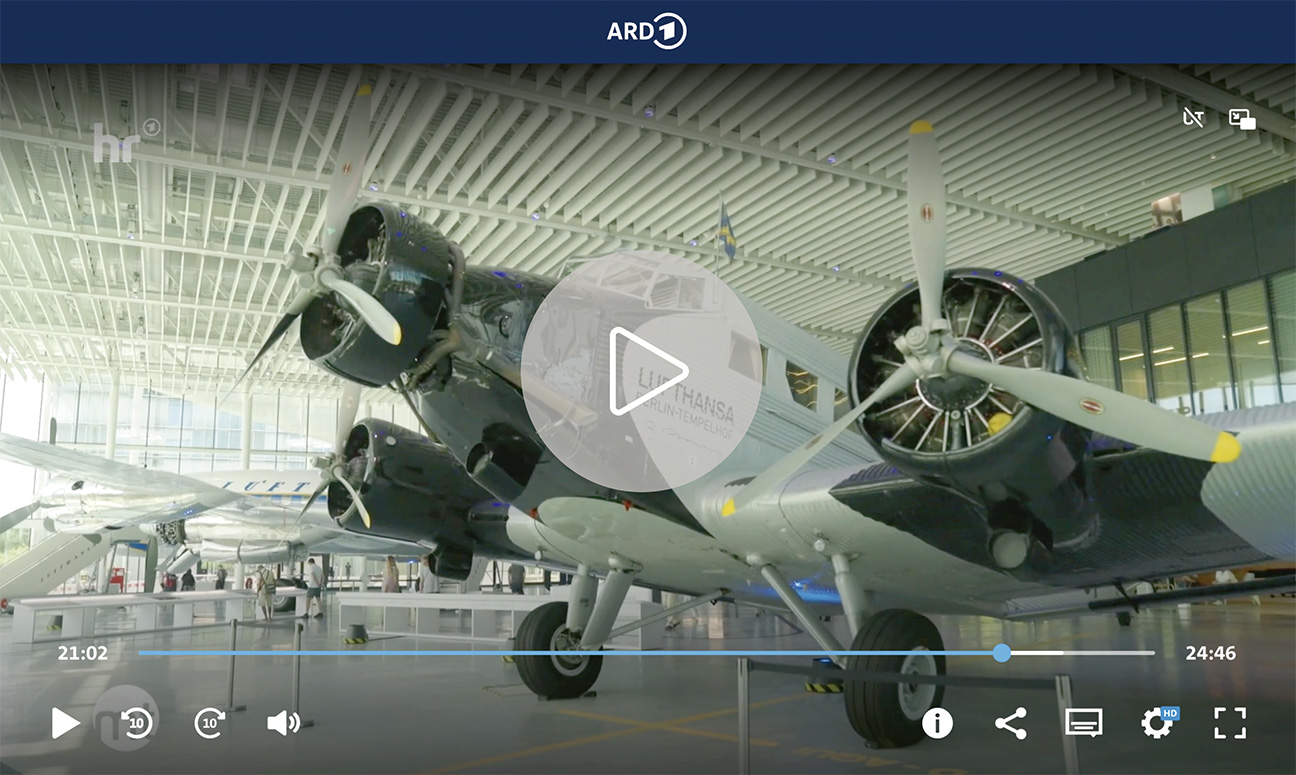
Hangar One: A TV report by Hessischer Rundfunk (in German). | |
| | | | Hangar One was built in just two years, right next to the Lufthansa Group’s headquarters, in time for the company’s 100th anniversary. Spanning more than 6,600 square meters, the exhibition takes visitors through the company’s history, from the first “Luft Hansa” in the 1920s to today’s Lufthansa Group, the world’s largest aviation group outside the U.S. The centerpieces of the exhibition are two aviation icons: the Junkers Ju 52 and the Lockheed Super Star. Both were restored specifically for Hangar One. The exhibition also sheds light on the darkest chapter in the company’s history: Lufthansa became part of the Nazi regime. Beginning in 1940, thousands of forced laborers worked under inhumane conditions in the company’s workshops. Beyond the exhibition, Hangar One offers space for meetings, conferences, and events in a unique aviation atmosphere. Modern conference rooms, flexible event spaces, and standard admission tickets can now be booked via the website. | |
| | | | Lufthansa GroupYour Contacts
Andreas Bartels
Head of Corporate
Communications
Lufthansa Group  +49 69 696-3659 +49 69 696-3659
 andreas.bartels@dlh.de andreas.bartels@dlh.de
| 
Dr. Kay Lindemann
Head of Corporate International
Relations and Government Affairs
Lufthansa Group +49 30 8875-3030
kay.lindemann@dlh.de
|

Martin Leutke
Lufthansa Group &
Lufthansa Airlines
Communications +49 69 696-36867
martin.leutke@dlh.de
| 
Jan Körner
Head of Government
Affairs Germany
Lufthansa Group +49 30 8875-3212
jan.koerner@dlh.de
|

Sandra Courant
Head of Political Communication
and Media Relations Berlin
Lufthansa Group +49 30 8875-3300
sandra.courant@dlh.de
| 
Ruben Schuster
Head of EU Liaison Office
Lufthansa Group
+32 492 228141
ruben.schuster@dlh.de |
| |
| | | | Published by:
Andreas Bartels
Head of Corporate Communications
Lufthansa Group Dr. Kay Lindemann
Head of Corporate International
Relations and Government Affairs
Lufthansa Group Martin Leutke
Lufthansa Group &
Lufthansa Airlines
Communications
Deutsche Lufthansa AG
BER CP, Konzernrepräsentanz
Lennéstraße 3, D-10785 Berlin | Editor in chief
Sandra Courant Editorial staff
Henrietta Dörries, Frederik Fink, Eleonore von Garmissen, Batughan Güler, Anton Heinecke, Maximilian Kiewel, Michael Lagemann, Thrasivoulos Malliaras, Marie-Charlotte Merscher, Dr. Christoph Muhle, Marius Specht Press date
23 September 2026 Agency partner
Köster Kommunikation |
| |
| | | | Received the policy letter via forwarding? Subscribe here for free. | |
|