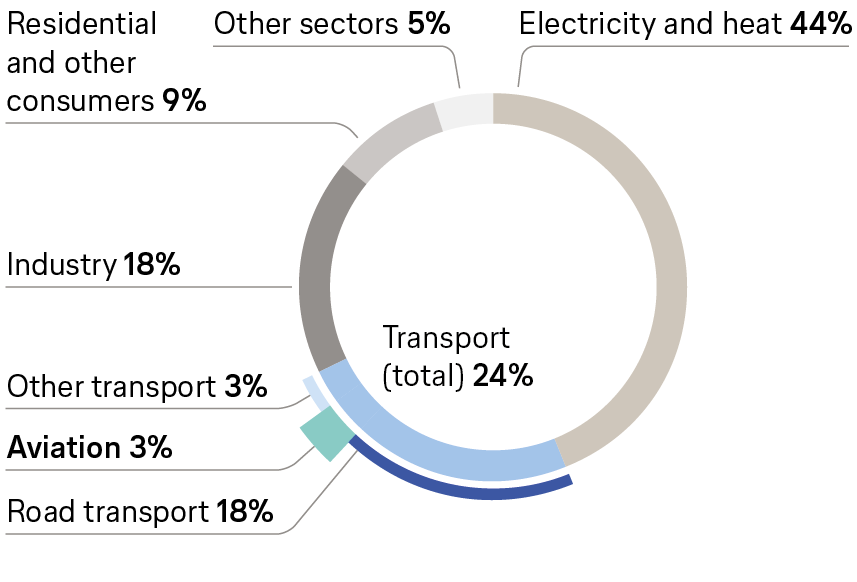
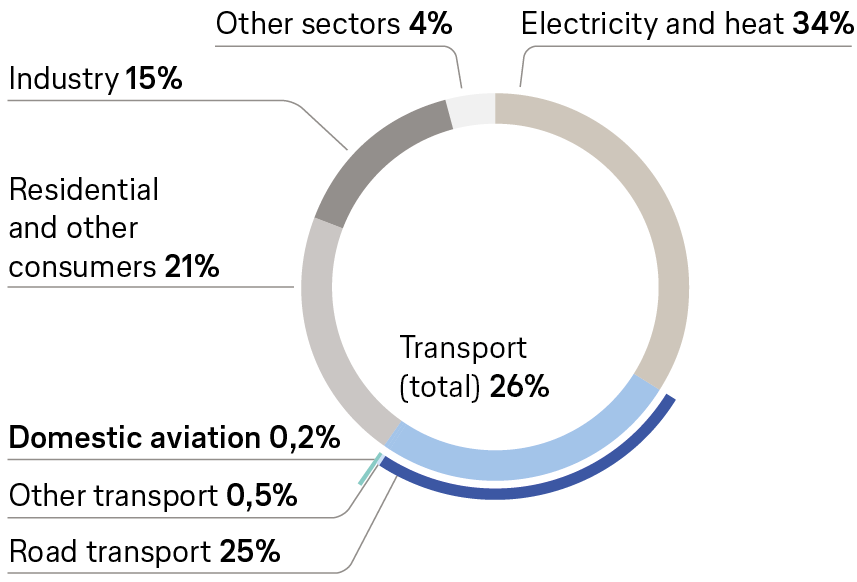
* Fossil CO2 emissions from fuel combustion.
Source: European Commission (JRC) and International Energy Agency (IEA), IEA-EDGAR CO2, EDGAR_2026_GHG, 2025 data (preliminary); own calculations.
Measures for more sustainable flying
To reduce the environmental impact of flying, the Lufthansa Group focuses primarily on five key pillars:
- Fleet modernization: By 2035, the Group airlines will receive more than 250 brand-new aircraft, including around 100 long-haul aircraft of the latest design. On comparable routes, these aircraft use up to 30 percent less fuel per passenger than the models they replace, with correspondingly lower CO2 emissions. Older aircraft models will be taken out of service. Every year, the Lufthansa Group invests up to 2.5 billion euros in the most extensive fleet modernization program in its history.
- Sustainable Aviation Fuels (SAF): SAF are another important key to reducing greenhouse gas emissions. The Lufthansa Group is one of the largest purchasers of SAF worldwide, even though the quantities of SAF available are currently still small. Additionally, the Lufthansa Group is driving forward the development and industrialization of next-generation sustainable fuels: Power-to-Liquid (PtL) technology can be used to produce synthetic kerosene from green electricity, water and CO2. Sun-to-liquid technology (StL) uses solar heat to convert CO2 into fuel.
- Optimization of flight operations: Through technological innovations, the Lufthansa Group continuously improves the fuel efficiency of its existing fleet. Take AeroSHARK, for example: the sharkskin-inspired film developed by Lufthansa Technik and BASF reduces the drag of aircraft and thus cuts kerosene consumption by around one percent. Lufthansa was the first airline group worldwide to equip selected aircraft with AeroSHARK, with more to follow. Artificial intelligence also helps optimize flight operations: The OPSD (Operations Decision Support Suite) platform, developed jointly with Google Cloud, supports decisions on which aircraft to deploy on which routes, for example, to minimize fuel consumption for each flight.
- Fares for more sustainable air travel: With the Lufthansa Group’s “Impact Fare Tickets”, passengers can support the use of Sustainable Aviation Fuels (SAF) across the Group’s route network as well as climate protection projects. These fares can be booked directly on both continental and intercontinental routes.
- Intermodality: The Lufthansa Group is continuously expanding its cooperation with rail providers. Its intermodal network now covers more than 70 destinations in nine countries with more than 3,000 connections per week. For every German feeder flight to Frankfurt, for example, Lufthansa offers an alternative by rail. The company is also expanding the strategic integration of air and rail in Asia. For more passengers to opt for rail, an efficient rail system and good connections between the hubs and long-distance rail services are needed.
Climate protection is a team effort: The transformation of aviation can only succeed through collaboration with customers, partners and policymakers. Policymakers can do more than just regulate. For example, more efficient airspace management and shorter flight routes would significantly reduce fuel consumption in Europe.
Lufthansa Group: Greater transport output, higher fuel efficiency*
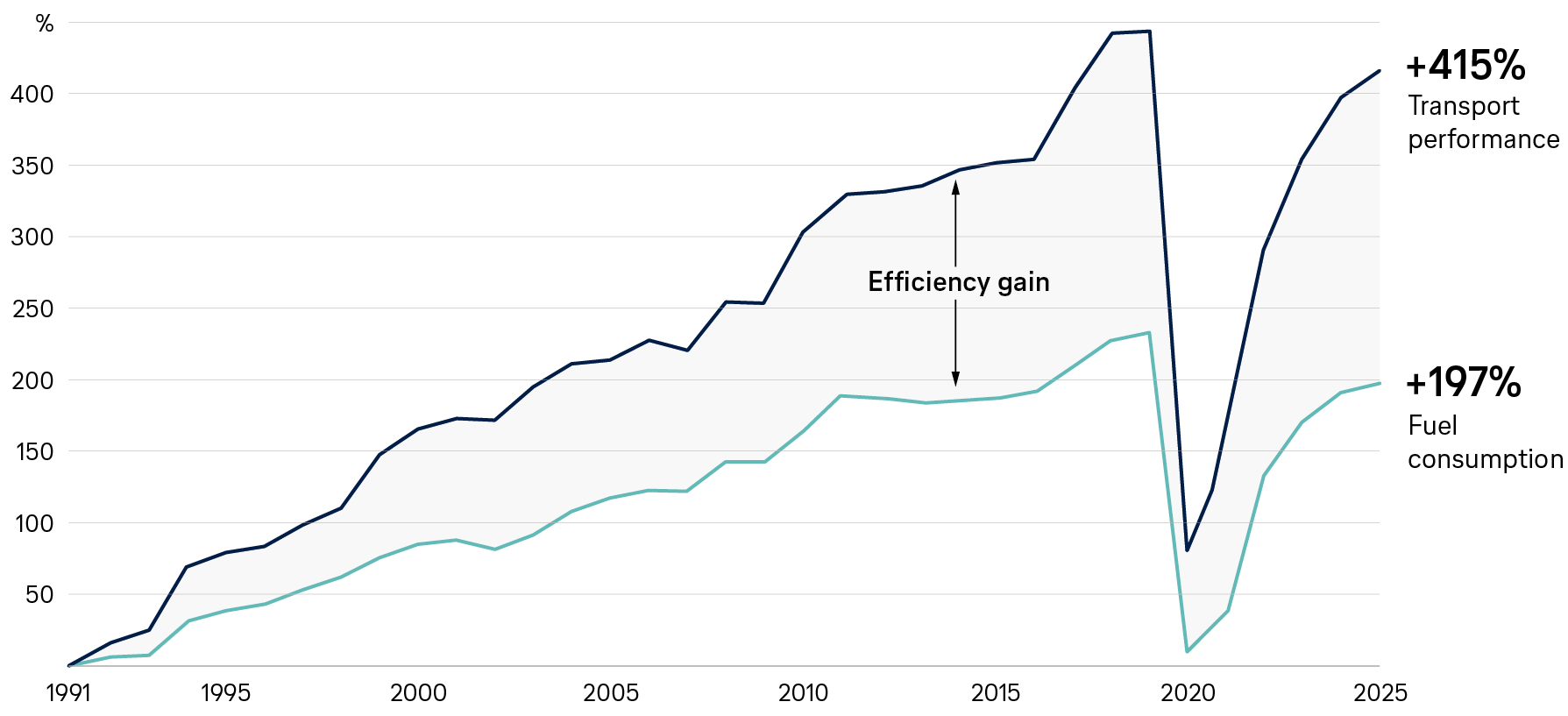
*Transport performance measured in ton-kilometers; scheduled and charter flights operated by Lufthansa Group airlines, excluding services provided by third parties.
Source: Lufthansa Group, Sustainability Fact Sheet 2025
Good score in CDP’s climate assessment
In the 2025 global climate assessment by the non-profit organization CDP (formerly Carbon Disclosure Project), the Lufthansa Group once again received a good rating for its CO2 reduction strategy and its implementation. On a scale from “A” (best result) to “D-,” the company was placed in the second-highest ranking band with a score of “B.” Of the 17 assessment categories, nine received the highest grade of “A,” while three were rated “A-.” Other rating agencies have also positively assessed the Lufthansa Group’s sustainability management.