| | | | Policy BriefDecember 2025 | |
| | | | Dear Readers,
Germany has lost ground as an aviation location. The federal government has recognized this and decided to reduce aviation taxes and fees. This is an important first step that is already having an impact. Lufthansa is currently able to maintain feeder flights to Munich that have been at risk due to excessively high costs. Eurowings offers new connections to European metropolises. Germany’s capital airport is benefitting in particular: at BER, Eurowings is expanding more than at any other German airport. This further strengthens the Lufthansa Group’s market-leading position as the most important airline group for Berlin.
Following the groundbreaking decision by the German federal government, the political course for aviation must now be urgently reset in Brussels as well. Germany, as Europe’s leading aviation nation, should advocate for this. Airlines and hubs in the EU face framework conditions that unilaterally weaken their international competitiveness. These include, among others, steadily rising taxes and fees, strict regulatory requirements, additional and unilateral climate policy requirements, and insufficient infrastructure. Europe must take countermeasures here.
Aviation and freedom of travel require security. In a time of increasing global conflicts, close cooperation between the German Armed Forces and industry is more important than ever. As the Lufthansa Group, we take responsibility. For more than 60 years, Lufthansa Technik has supported the German government fleet and will in future also support the P-8A “Poseidon” maritime patrol aircraft, among others. Lufthansa Aviation Training supports the armed forces in training pilots. You can read more about the deepened cooperation with the German Armed Forces in this policy brief.
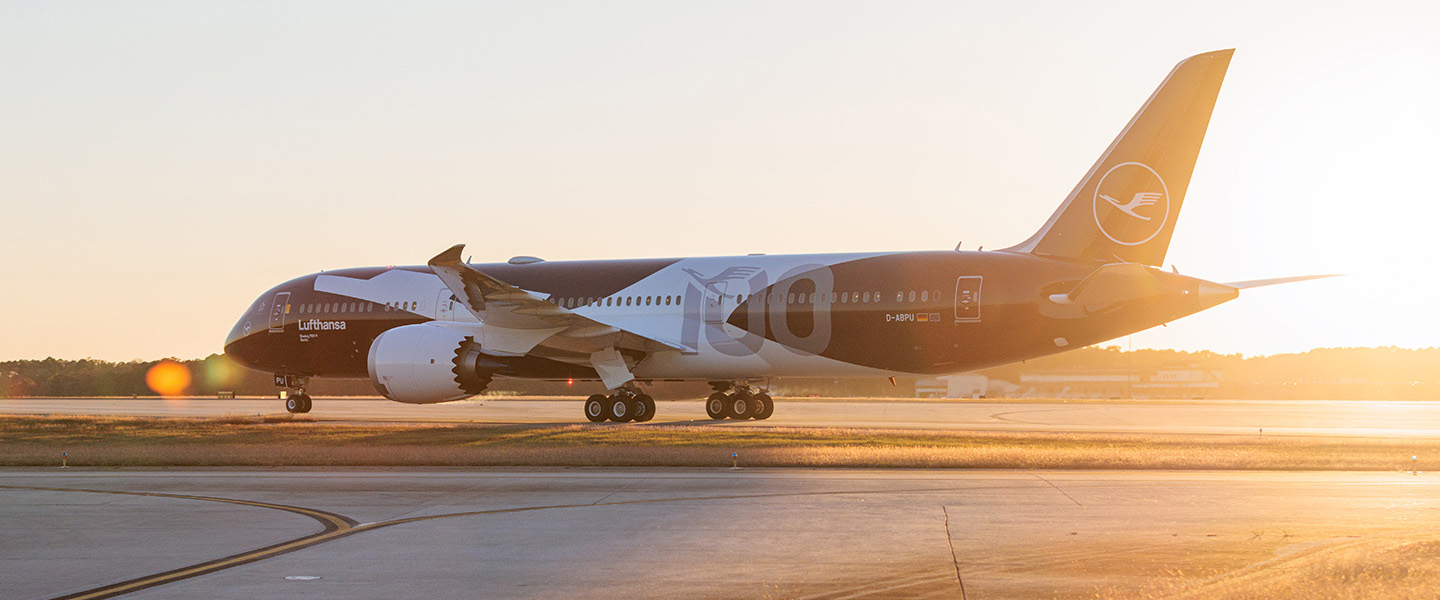
We are already looking forward to the coming year, when Lufthansa will celebrate its 100th anniversary. The cover image shows the first aircraft to receive a special livery on this occasion – a Boeing 787-9. It will be delivered to Lufthansa in the coming days. Five more aircraft will follow in 2026 in the special anniversary look.
We would be delighted if you remained loyal to us in the coming year, which will be so special for Lufthansa, and wish you a wonderful end to the year and a good start to 2026! Andreas Bartels
Head of Corporate Communications
Lufthansa Group | Dr. Kay Lindemann
Head of Corporate International Relations and Government Affairs
Lufthansa Group
|
| |
| | | | Competitive AviationStill a Long Way to GoA first step has been taken. The coalition is signaling support for aviation. But to what extent will the relief measures take effect? | |
| | | | Impact of the relief package
Departure from FRA 
Source: BDF; A320 flight with EU destination and 150 passengers | |
| | | | For many years, state-imposed costs for flights within and departing from Germany have risen. Now, there is a shift in thinking. The federal government has agreed to reduce the aviation tax and certain fees. This is an important first step – with immediate impact: Lufthansa and Eurowings will maintain connections next summer that had already been under review. Overall, the Lufthansa Group is stabilizing its offering at German airports. This is good news for many regions. Connectivity is not a luxury, but a foundation for investment, growth, and local jobs. Competitive pressure remains high
Nevertheless, location costs remain high. Next year, taxes and fees for an A320 departure from Frankfurt will amount to around €4,300 instead of €4,800. That sounds like progress – until you compare it internationally: in Istanbul, costs currently stand at €550. In Madrid? €690. Zurich? €2,900. Germany remains under significant pressure in global competition. Additional steps are needed. Fees for air traffic control and aviation security must – as announced – be reduced swiftly. And the EU must finally act. | |
| | | | “I am not willing to elevate the issue of environmental and climate protection to such a high level that a large part of our industrial core in the Federal Republic of Germany will be lost.” Friedrich Merz
Federal Chancellor of Germany
CSU Party Congress,13 Dec 2025 | |
| | | | “Lowering the aviation tax is a step in the right direction – but much more needs to follow. (…) We are deeply concerned that European companies are subject to stricter rules than others, while airlines from third countries can circumvent such requirements. Fair competition looks different.” Christine Behle
Vice Chairwoman of ver.di
Ver.di press release, 14 Nov 2025 | |
| | | | When will Brussels reconsider its approach?
So far, impulses from Brussels have been scarce. The European Commission’s Sustainable Transport Investment Plan (STIP) falls far short of expectations. It neither reduces prices for sustainable aviation fuels (SAF) nor creates fair competitive conditions. Subsidies alone are not enough to establish SAF as a competitive alternative. Crucial are concrete measures to lower SAF prices in the long term, targeted development of production capacities for biogenic and synthetic SAF, and greater flexibility for airlines, e.g. through a book-and-claim system. A year after the Draghi Report, the verdict is clear: isolated funding pots and reduced reporting obligations are merely cosmetic corrections and fail to meaningfully address the challenges. The EU needs fundamental structural reforms. The course change demanded by 19 heads of state and government is urgently needed. Above all, climate policy must become more pragmatic and realistic. Large parts of industry and trade unions share the concern that, otherwise, value creation and prosperity will continue to erode. No “business as usual”
Europe needs consistent policies that prioritize competitiveness. Berlin and Brussels must pull together to achieve this. For aviation, this means: the Green Deal must be reformed to be competition-neutral so that EU airlines are not unilaterally disadvantaged in global competition. Instruments such as a climate protection levy, levied independently of the transfer location, can create a level playing field. Without these corrections, the coalition’s relief package will not go far enough. For connectivity and value creation in Germany, this would not bode well. At least, the past weeks have shown: where there is political will, there is a way. | |
| | | | “We need to put interim targets on a realistic basis. People must be able to continue working. (…) We need an update in climate policy.” Dr. Reiner Haseloff
Minister-President of Saxony-Anhalt
Interview in Handelsblatt, 15 Aug 2025 | |
| | | | “The way we’re pursuing climate protection now is not only harmful to jobs and prosperity but also to the global climate itself.” Michael Vassiliadis
Chairman of the Union IGBCE
Pioneer Briefing, 20 Oct 2025 | |
| | | | “Currently, the ETS system feels like a lead vest strapped to us. Then Brussels gives us a new pair of running shoes and says: ‘Now run fast!’ That’s not how it works.” Christian Kullmann
CEO Evonik
Interview in Süddeutsche Zeitung, 8 Oct 2025 | |
| | | | Security Policy in the ‘Zeitenwende’Lufthansa Expands Cooperation with the German Armed ForcesThe Lufthansa Group and the German Armed Forces have a long-standing partnership. Now, the Group is intensifying this cooperation through projects such as the P-8A Poseidon, the PEGASUS reconnaissance system, and the Air Force’s new ‘flying intensive care unit’. By doing so, Lufthansa is helping to mark a turning point in security policy and the defense capabilities of Germany and Europe. | |
| | | | 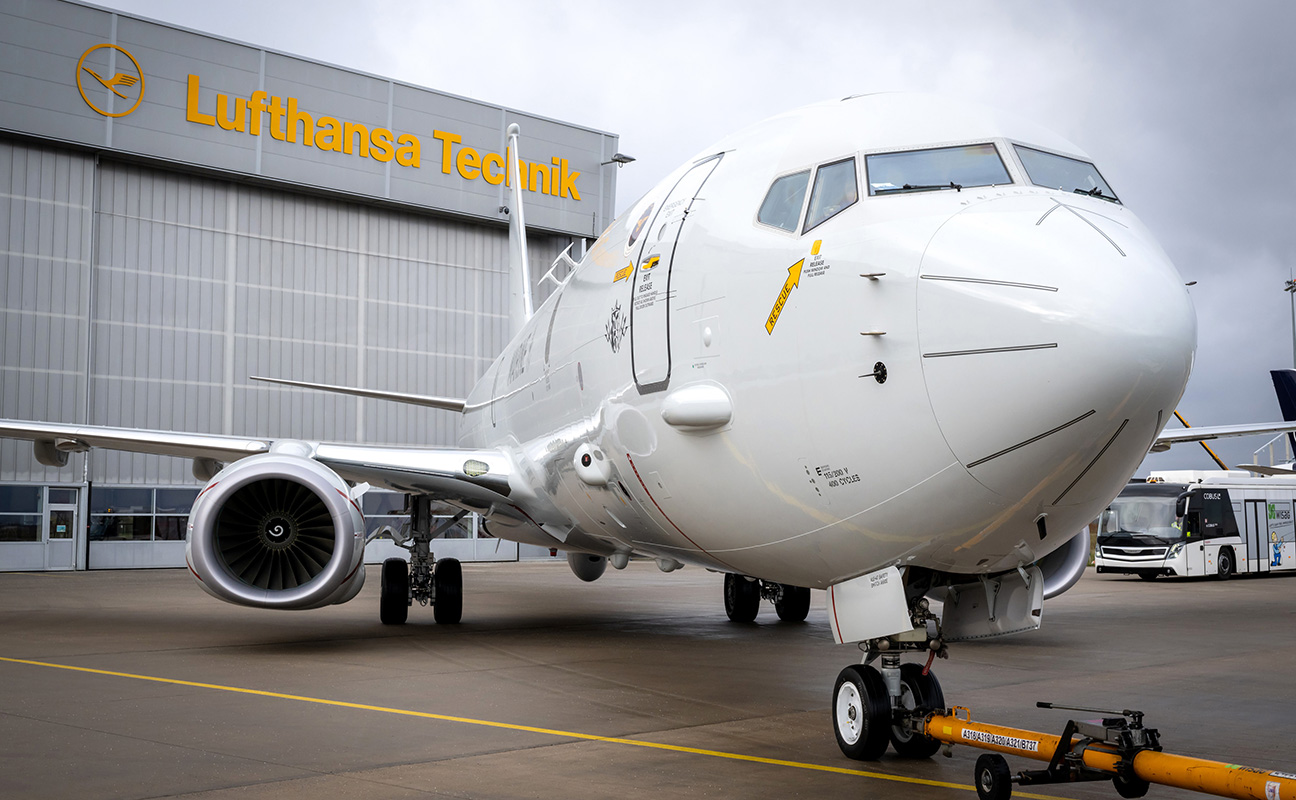 A P-8A “Poseidon” of the German Navy. | |
| | | | Since the founding of the Federal Republic of Germany, the Lufthansa Group has been a reliable partner for the German Armed Forces. The company provides increased support to the armed forces in areas where specific operational capabilities are developed, such as the introduction of new aerial systems, maintenance and repair, and the training of aircrew and technical personnel. Lufthansa Technik has worked with the German Air Force for over 60 years, modifying and maintaining its reconnaissance and tanker aircraft, and servicing the German government fleet – from the state-of-the-art A350 long-haul aircraft to the Bombardier Global. Drawing on this experience, the company is now offering its core competencies in airborne weapon systems under the ‘Lufthansa Technik Defense’ brand. The idea is simple: if processes, standards and industrial capacities are consistently geared towards availability and quality, civil expertise can strengthen defense capabilities. Three projects demonstrate how civil and military expertise can be effectively combined: P-8A Poseidon: Operational readiness for the German Navy
The P-8A Poseidon marks a new chapter in long-range maritime reconnaissance for the German Navy. At least eight of these Boeing aircraft will be delivered to the German Armed Forces, with the first having been delivered recently. As an advanced submarine hunter, the P-8A is equipped to carry torpedoes and missiles, and will conduct patrols in the North Sea, Baltic Sea and other areas. This represents a significant enhancement to Germany’s and the alliance’s capabilities. Lufthansa is a key industrial partner in this project. Lufthansa Technik is responsible for central tasks throughout the entire support and maintenance chain, including maintaining aircraft and components, providing spare parts, managing technical operations, and training naval maintenance personnel. The first major maintenance check is scheduled to take place in Hamburg in early 2026, which is an important step in establishing permanent support capacities in Germany. | |
| | | | 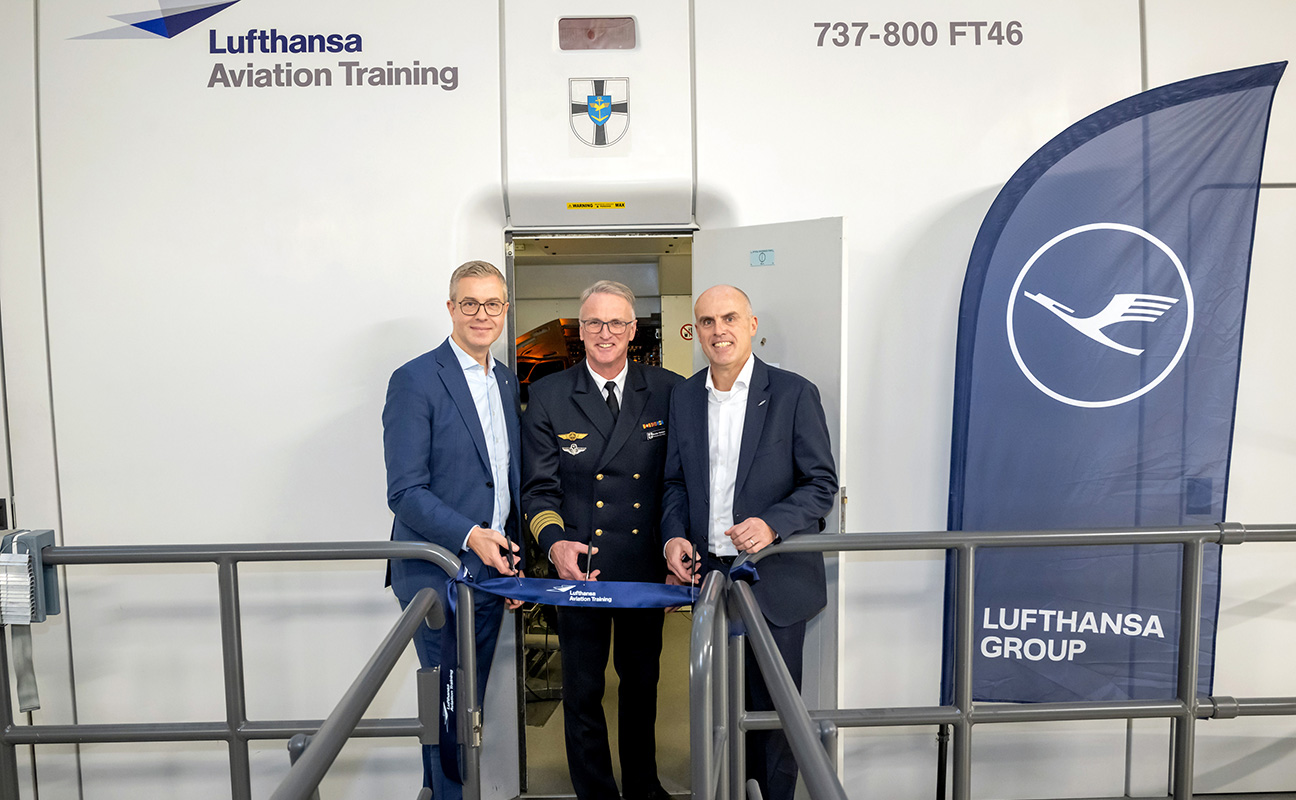 Mayor and Senator of Berlin Stefan Evers, Navy Captain Broder Nielsen, Commander of the Naval Air Command, and Matthias Spohr, CEO of Lufthansa Aviation Training (from left to right), opened the P-8A training programme for German Navy pilots at the Lufthansa Aviation Training Center in Berlin. | |
| | | | In parallel, Lufthansa Aviation Training (LAT) is preparing crews quickly and in a standardized way for flight operations. Together with the U.S. company ASEC, a close partner of the U.S. Navy, pilots train both in the United States and at the Lufthansa Training Center in Berlin-Schönefeld. LAT provides the Boeing 737 Type Rating – an essential qualification for subsequent P-8A flight operations. | |
| | | | 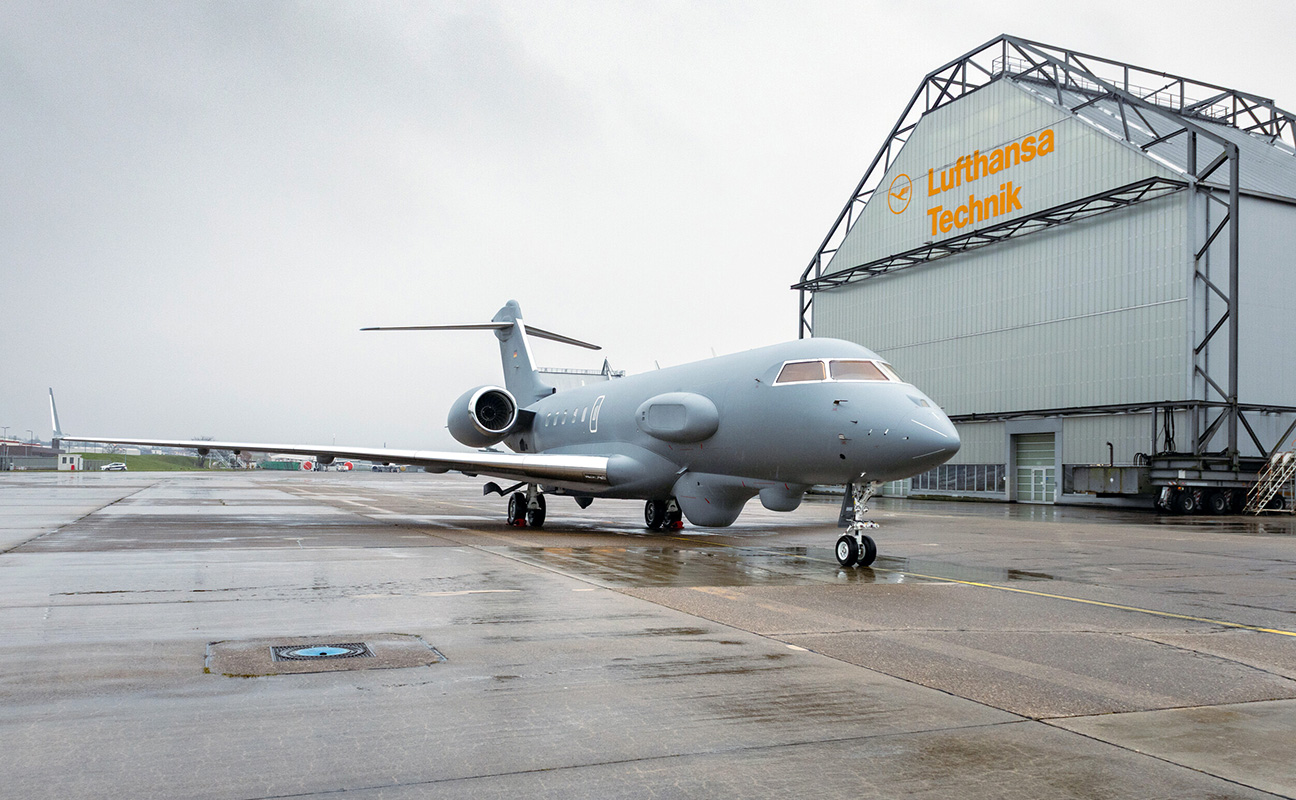
Arrival of the first PEGASUS aircraft in Hamburg. | |
| | | | PEGASUS: Aerial Reconnaissance
As part of the PEGASUS project (PErsistent German Airborne SUrveillance System), the German Armed Forces are acquiring a new key capability in the field of airborne reconnaissance. For this purpose, three Bombardier Global 6000 aircraft are being comprehensively refitted by Lufthansa Technik. The transformation of the aircraft into an operational reconnaissance system is currently beginning in Hamburg, with a focus on integrating Hensoldt’s signal intelligence system (SIGINT), installing the mission cabin, and fitting additional military and communication systems. The responsibility for the aircraft’s civil and military certification also lies with Lufthansa Technik. | |
| | | | 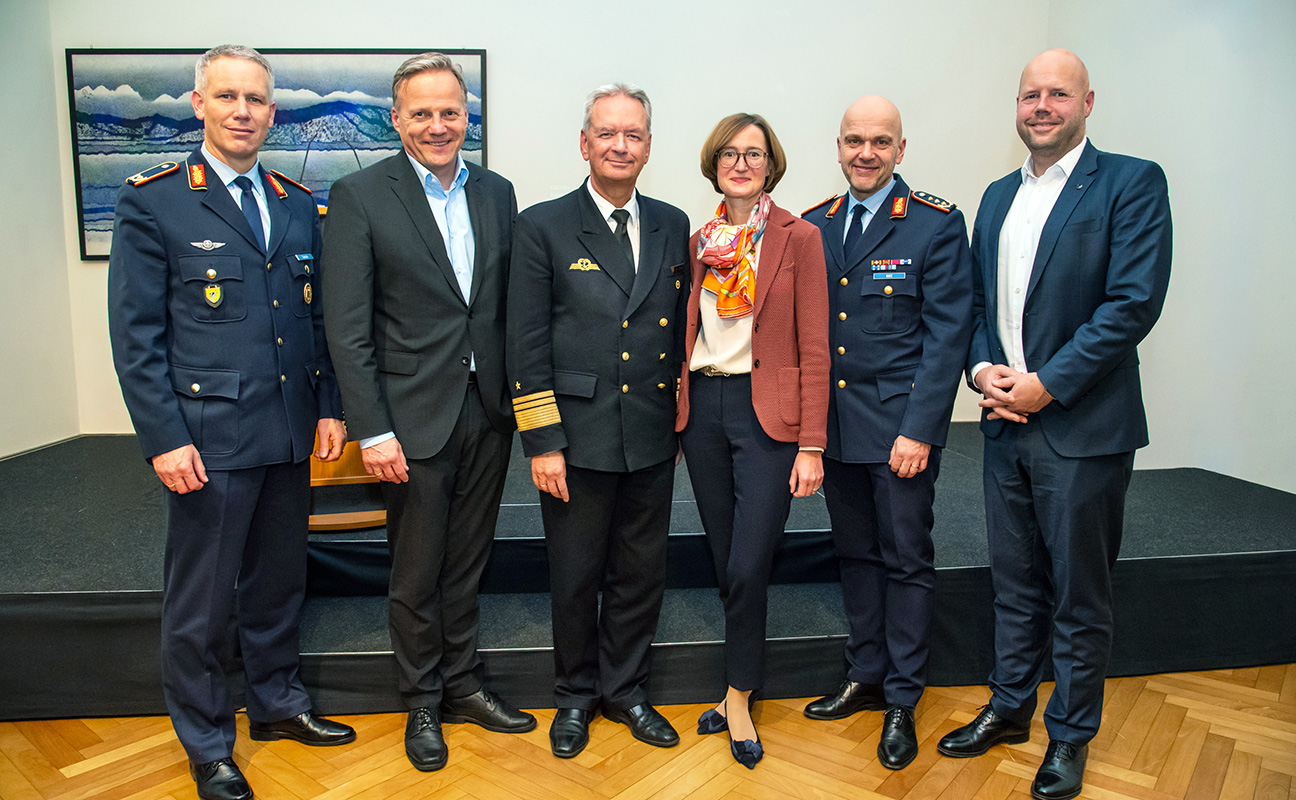
Left to right: Brigadier General Henrik Scholz, German Air Force Command; Sören Stark, CEO of Lufthansa Technik; Vice Admiral Dr. Thomas Daum, Inspector of the Cyber and Information Domain Service; Dr. Janna Schumacher, CHRO of Lufthansa Technik; Lieutenant General Günter Katz, Commanding General Air Force Forces Command; and Michael von Puttkamer, Vice President Special Aircraft Services & Defense at Lufthansa Technik. | |
| | | | Pluto MedEvac: Flying intensive care units for the German Armed Forces
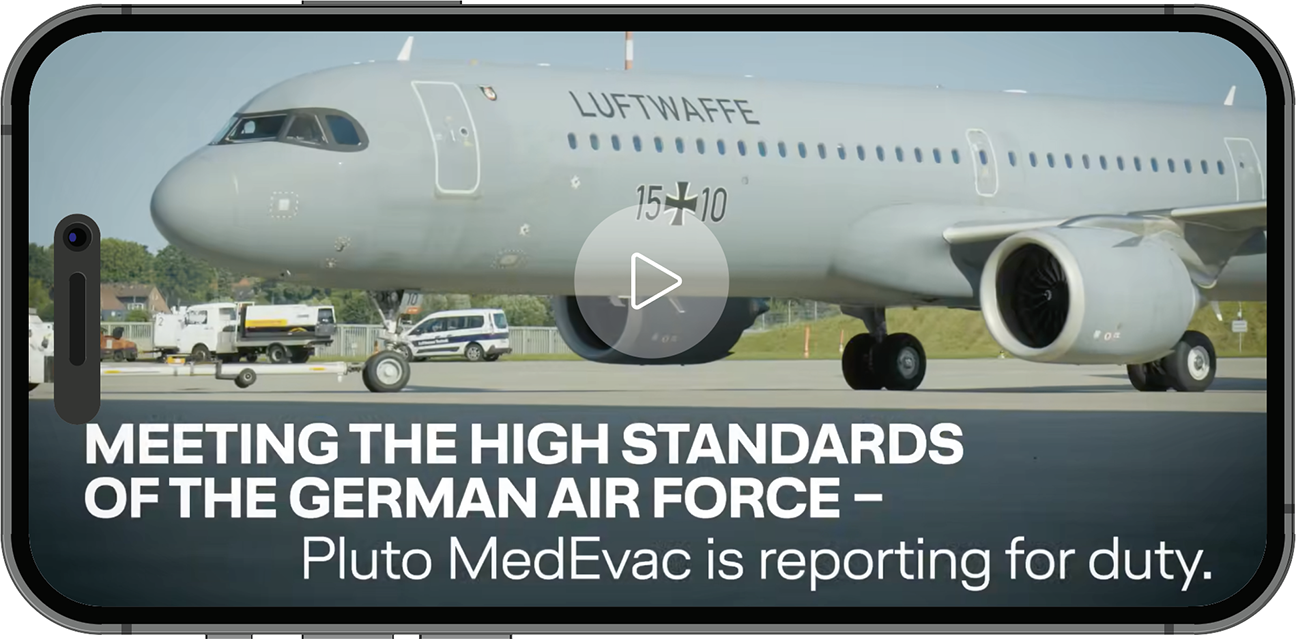
In a mutual defense or crisis scenario, resilience is as important as striking power, and this begins with the care of the wounded. Anyone deploying and maintaining forces must be able to airlift the injured quickly and safely, providing intensive medical care at all times. This is precisely what the new ‘flying intensive care units’ provide: two Airbus A321LRs belonging to the German Air Force, equipped by Lufthansa Technik and ready for action at short notice. They were tested under realistic conditions during the NATO exercise ‘Resilient Care’ in October 2025. The New Generation Patient Transport Unit (PTE NG) can care for up to six intensive care patients and has a capacity of up to 72,000 liters of oxygen. | |
| | | | Securing sovereignty, including in the maintenance of military hardware
For these contributions to have a lasting effect, a clear political framework is needed, as is a principle that will set the standard for the ‘Zeitenwende’ in security policy: sovereignty in operation and maintenance. Germany’s reliance on proven systems from our American partners for the P-8A, F-35 and CH-47F directly enhances our alliance capabilities. It is crucial that Germany can operate these key platforms independently in everyday situations and in times of crisis, with the necessary maintenance and repair capacities and a reliable supply of spare parts and repair facilities in Germany. Wherever it is technically feasible and necessary for security reasons, German companies should be involved. The Bundestag’s decisions on the greater involvement of the German industry point the way forward. It is now important to implement these guidelines consistently and provide political follow-up. Only then will the ‘Zeitenwende’ become a reality, with better availability for the German Armed Forces, greater resilience for Germany and higher operational readiness for NATO. | |
| | | | Germany’s Capital AirportEurowings Focuses on BerlinGermany’s largest leisure airline is making strong investments at BER. From summer 2026, Eurowings will connect Berlin with Lisbon and operate up to twelve weekly flights to London. Connections to popular holiday destinations are also being expanded. Since autumn, Dubai passengers have been enjoying greater comfort with Eurowings’ new business class seats. | |
| | | | Eurowings Destinations from Berlin
Summer Schedule 2026 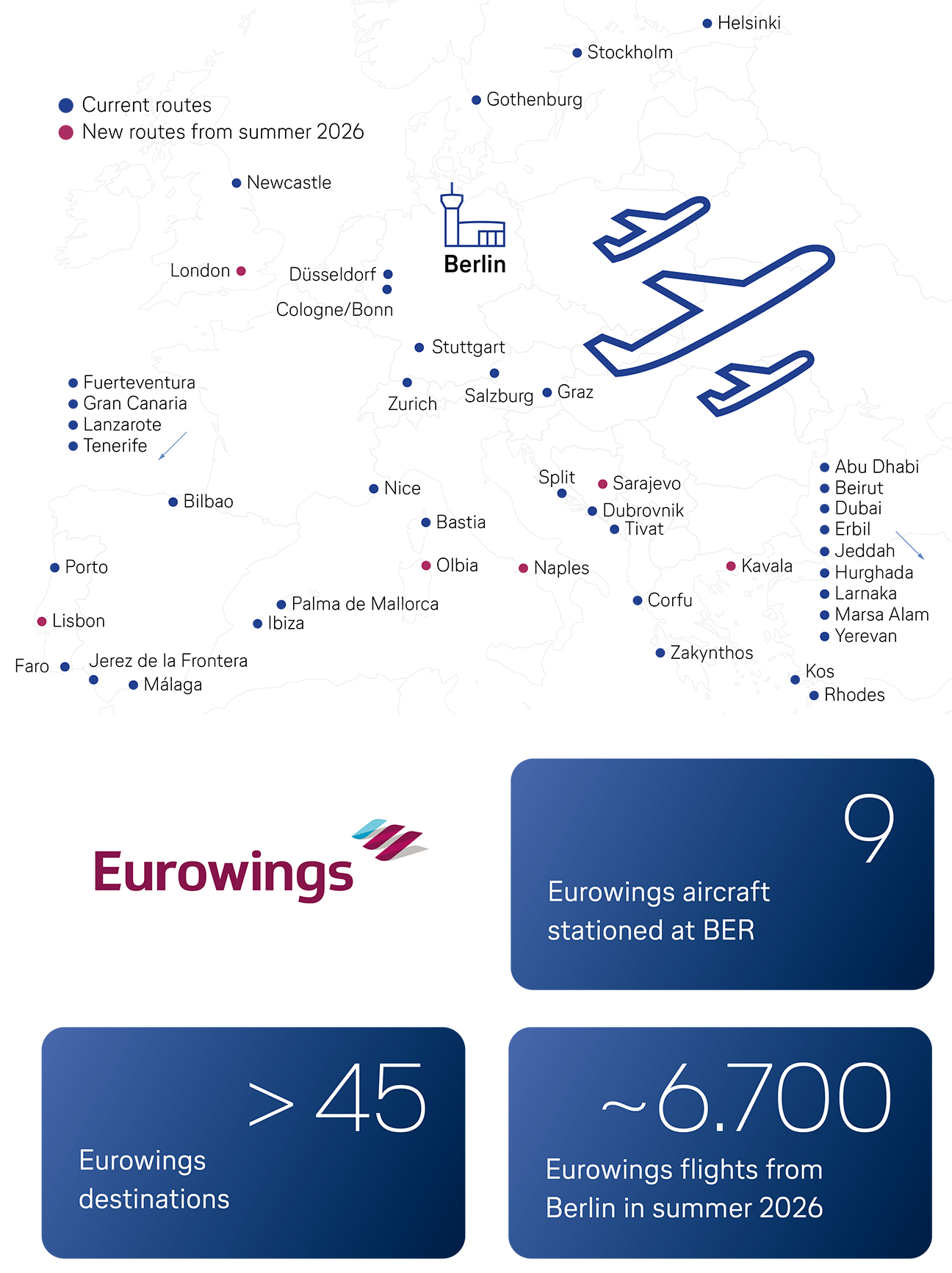
| |
| | | | Berlin and the Lufthansa Group share an almost 100-year history. In 1926, the first Lufthansa was founded here. Today, the Group’s airlines hold a market share of around 30 percent at Germany’s capital airport – no other company has a stronger presence there. More connections, more choices
While other airlines, most recently Qatar Airways, are reducing services despite existing traffic rights, Eurowings is expanding its presence at BER more strongly than ever before. In line with the Lufthansa anniversary, new direct flights to London, Lisbon, and Sarajevo will be added to the schedule from summer 2026. Up to twelve weekly flights will then connect the Spree to the Thames. Also new in the program are Olbia, Naples, and Kavala. With more than 45 destinations in 20 countries, the Eurowings summer flight schedule 2026 offers a record selection for the capital region. Frequencies to popular holiday destinations such as Mallorca, Split, Faro, and Larnaca will also be increased. Eurowings is expanding faster at BER than at any other German airport. Two additional aircraft will be stationed, increasing the fleet to a total of nine aircraft. This strengthens the business location Berlin-Brandenburg and creates new jobs locally. The relief measures for aviation recently decided by the federal government support this development and help stabilize and partially expand services on European routes. More comfort for passengers
Eurowings is not only investing in its route network but also in an improved travel experience. With the new Premium BIZ Seat, passengers on the Berlin–Dubai route have been enjoying enhanced comfort, privacy and service since November. This makes flying even more attractive for guests from Berlin. | |
| | | | Lufthansa Cargo Milestones Achieved at Air Freight CenterLufthansa Cargo is investing approximately 600 million euros in one of Europe’s most modern air freight centers at Frankfurt Airport by 2030. | |
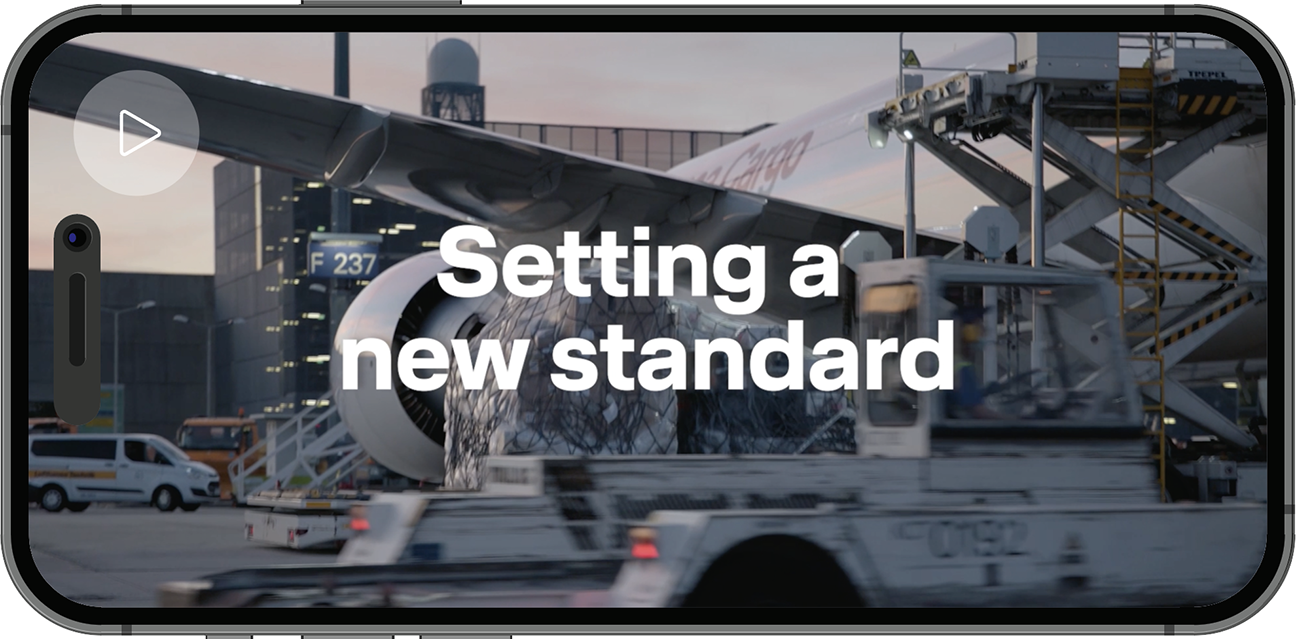
| | | | The construction of the largest infrastructure project within the Lufthansa Group is progressing according to plan – despite 24/7 freight operations. The shell construction of the first phase is complete, and the topping-out ceremony has been celebrated. Installation of the warehouse conveyor systems and the 42-meter high-bay storage facility is advancing. The buildings and facilities of the first construction phase are scheduled to go into operation in summer 2026. In parallel, approximately 10,000 m2 of office space in the new Lufthansa Cargo headquarters are being modernized. The first areas will be completed in December, with the second construction phase following in autumn 2026, and two additional phases by early 2028. The modernization of buildings, technology, IT systems as well as digitization, and automation is making Lufthansa Cargo’s freight handling more efficient and faster. Photovoltaic systems, heat recovery, and waste heat utilization contribute to greater sustainability. As the world’s fourth-largest cargo airline, Lufthansa Cargo is making a long-term commitment to Frankfurt Airport, where it handles around 70 percent of its total air freight. This strengthens the air freight hub and improves the connection of the German and European economies to global markets. | |
| | | | PtL KeroseneEurowings Begins Strategic PartnershipThe Lufthansa Group airline plans to become the first purchaser of electricity-based aviation fuel at Düsseldorf Airport. | |
| | | | Eurowings and Greenlyte have signed a letter of intent for a strategic partnership. The Essen-based start-up is building a facility at Düsseldorf Airport for next-generation sustainable aviation fuel, known as Power-to Liquid kerosene (PtL). As part of a Memorandum of Understanding (MoU), Eurowings intends to exclusively purchase the entire production volume of the PtL pilot project for an initial three years. Additionally, the Lufthansa Group airline will become a strategic partner in the innovation project. The facility at Düsseldorf Airport captures CO2 directly from the air and combines it with green hydrogen to produce synthetic kerosene. With a capacity of approximately 150 tons of PtL per year, the project aims to accelerate the market ramp-up of electricity-based aviation fuels. Currently, PtL is up to ten times more expensive than fossil kerosene and is only produced in a few laboratory and test facilities. For large-scale use, availability and production volumes must increase significantly, and costs must decrease substantially – also in order to meet future blending quotas. | |
| | | | SustainabilityLufthansa Group Expands Fuel Efficiency ProgramMore efficiency, fewer emissions: The flight operations of the Lufthansa Group are becoming increasingly sustainable – digital innovations are now driving further progress. | |
| | | | The Lufthansa Group is consistently advancing its company-wide ‘OPS Sustainability’ program. The goal is to make the operational processes of all Lufthansa Group airlines even more sustainable through efficiency improvements. Since 2022, more than 90 individual measures have already saved 54,000 tons of kerosene, thereby avoiding around 170,000 tons of CO2 emissions. This corresponds to the emissions of approximately 640 round-trip flights between Munich and New York with an Airbus A350-900. In the future, an additional 50,000 tons of CO2 are expected to be avoided annually. To achieve this, the Lufthansa Group is increasingly utilizing digital tools and data-driven decision models that enable more precise fuel planning. Improvements in flight operations, such as more efficient taxiing and approach procedures, demand-based water loading, and optimized flight planning, are also being implemented. Efficiency improvements are a key lever for more sustainable flying. The ‘OPS Sustainability’ program thus makes an important contribution to reducing the environmental impact. | |
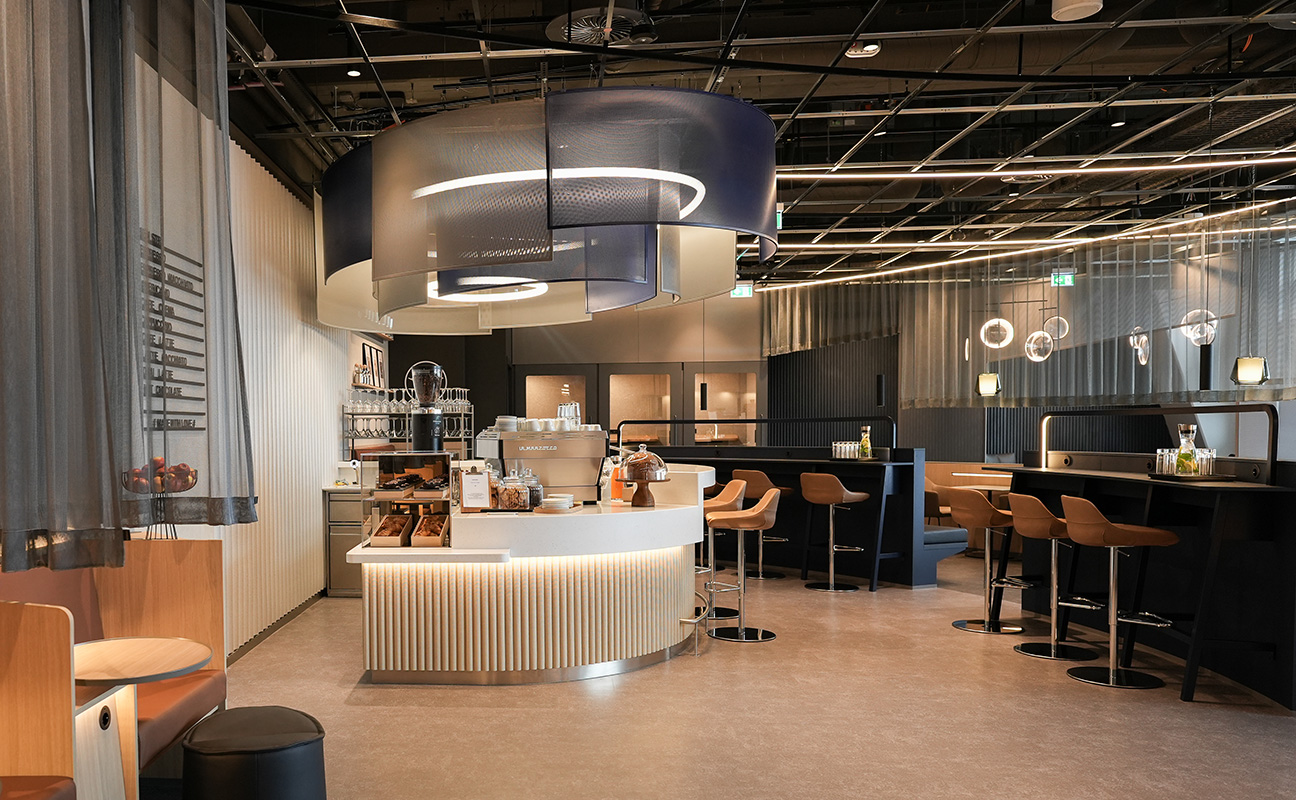
| | | | Whether traveling for business or leisure, frequent flyers and premium-class passengers worldwide appreciate the comfort of Lufthansa Lounges. From now on, travelers at Stuttgart Airport can once again enjoy a modern Business and Senator Lounge. Both areas have been completely redesigned and are now officially open. The lounge is perfectly equipped for all needs, offering areas for working, reading, relaxing, or enjoying quiet privacy. A special highlight awaits guests of the Senator Lounge: Coffee specialties from local roasteries will now be freshly prepared at the Barista Coffee Bar. Access to both lounges is conveniently managed through automated, digital entry control. Guests in Stuttgart had to wait five years for the Lufthansa Lounge. After its closure in 2020, mandatory fire safety measures prevented an earlier reopening. Lufthansa used this time for a comprehensive overhaul – and now offers its guests at Stuttgart Airport a significantly enhanced premium experience. | |
| | | | Lufthansa GroupYour Contacts PDF PDF

Andreas Bartels
Head of Corporate
Communications
Lufthansa Group  +49 69 696-3659 +49 69 696-3659
 andreas.bartels@dlh.de andreas.bartels@dlh.de
| 
Dr. Kay Lindemann
Head of Corporate International
Relations and Government Affairs
Lufthansa Group +49 30 8875-3030
kay.lindemann@dlh.de
|

Martin Leutke
Head of Digital Communication
and Media Relations
Lufthansa Group +49 69 696-36867
martin.leutke@dlh.de
| 
Jan Körner
Head of Government
Affairs Germany
Lufthansa Group
+49 30 8875-3212
jan.koerner@dlh.de |

Sandra Courant
Head of Political Communication
and Media Relations Berlin
Lufthansa Group +49 30 8875-3300
sandra.courant@dlh.de
| 
Ruben Schuster
Head of EU Liaison Office
Lufthansa Group
+32 492 228141
ruben.schuster@dlh.de |
| |
| | | | Published by:
Andreas Bartels
Head of Corporate Communications
Lufthansa Group Dr. Kay Lindemann
Head of Corporate International
Relations and Government Affairs
Lufthansa Group Martin Leutke
Head of Digital Communication
and Media Relations
Lufthansa Group
Deutsche Lufthansa AG
BER CP, Konzernrepräsentanz
Lennéstraße 3, D-10785 Berlin | Editor in Chief:
Sandra Courant Editorial Staff:
Annette Braun, Anton Heinecke, Maximilian Kiewel, Marie-Charlotte Merscher, Dr. Christoph Muhle, Philipp Struve Press date:
16 December 2025 Agency Partners:
Köster Kommunikation |
| |
| | | | Received the policy letter via forwarding? Subscribe here for free. | |
|